
 EN
 English
 繁体中文
 Italian
 Greek
 Spanish
 Hebrew
 Japanese
 Portuguese
 Korean
 Russian
 French
 German
 Arabic
Blog & Events
Follow NOVANEON for more valuable information to know early
Follow NOVANEON for more valuable information to know early
Nov 18Source: Views: 9
Installers often hunt for one magic number. The surprising truth: no single optimal mounting distance exists for a curved facade led wallwasher. Three variables decide it. Beam angle sets how wide the light spreads. Curve radius sets how tightly the fixture must bend. The desired effect sets intensity and coverage. Change any one, and the right figure shifts.
This matters for wall washing on any bend. A fixture placed too close or too far produces uneven light, hotspots, or wasted output. Readers will learn a practical method to reason out the right spacing for their project. They will also learn how to test a mockup before final installation. Careful wall washing rewards that testing.
Beam angle is the first driver of mounting distance. A wide beam spreads light across more wall at a given setback, but it softens intensity. A narrow beam reaches farther with more definition. This trade-off shapes every decision in flexible facade wall washing.
Flexible wall washers can achieve a maximum washing distance of up to 3 meters. That ceiling means the setback directly limits the wall washing height and coverage a project can reach. A 15-degree mini narrow beam offers a more defined light path and cleaner alignment. It helps control light distribution when the fixture sits farther from the wall. Teams should weigh beam angle in relation to architectural details, since cornices and recesses change how light lands.
Fixture spacing must scale with distance and beam angle. Place units too far apart and gaps appear between pools of light. Place them too close and the overlap wastes output and creates bright bands. Wider beams and longer setbacks allow wider spacing. Narrow beams and short setbacks demand tighter spacing. Consistent wall washing depends on this balance.
This logic applies to every led flexible wall washer on a facade. A flexible wallwasher set close to the wall throws a tight, bright pool. The same unit set farther out spreads a softer, broader wash. Spacing that suits one setup fails the other. Designers who plan spacing alongside the setback protect even illumination across the full run, even on a curved plane.
Flexible wall washers and led wall washers both reward this discipline. Good flexible facade wall washing starts with the beam, then the setback, then the spacing. That order keeps architectural wall washing led flex predictable on site. It also keeps flexible led wall washing efficient, since no output lands where the wall never shows it.
Tighter curve radii demand more flexible fixtures. A gentle bend tolerates a stiffer product. A sharp bend does not. Flexible 3D bendable LED wall washers enable continuous wall washing along curves, facades, and complex structures. Their performance depends on proper mounting distance planning. A curved wall washer led flex bends to follow the geometry, so the light source stays parallel to the surface. That parallel path supports even illumination across the whole run.
Shapeable aluminum mounting rails provide mechanical support and a defined mounting route along curved facades. These rails help hold a consistent distance between fixture and wall. A consistent setback keeps the wash smooth on a curved building facade. Teams that plan flexible facade wall washing on complex geometry should treat the rail as part of the optical design, not just a bracket.
A poor fit produces predictable failures. Uneven setback creates hotspots where the fixture drifts closer to the wall. Gaps appear where it pulls away. Stress on the fixture rises when a stiff product fights the curve. None of these outcomes favors any one mounting approach. Each simply shows why the fixture must match the radius.
NOVANEON's flexible wall washers and high-efficiency 3D bending LED flex are engineered for outdoor durability. They carry IP65/IP66/IP68 ratings, UV-resistant silicone housings, and a 5-year warranty. Rapid 3–5 day customization supports tailored curve geometry. This flexibility serves flexible wallwasher lighting on curved facades and architectural wall washing led flex projects alike. A flexible wall washer that follows the curve protects both the wash quality and the fixture itself. Good wall washing starts with a fit that respects the radius.
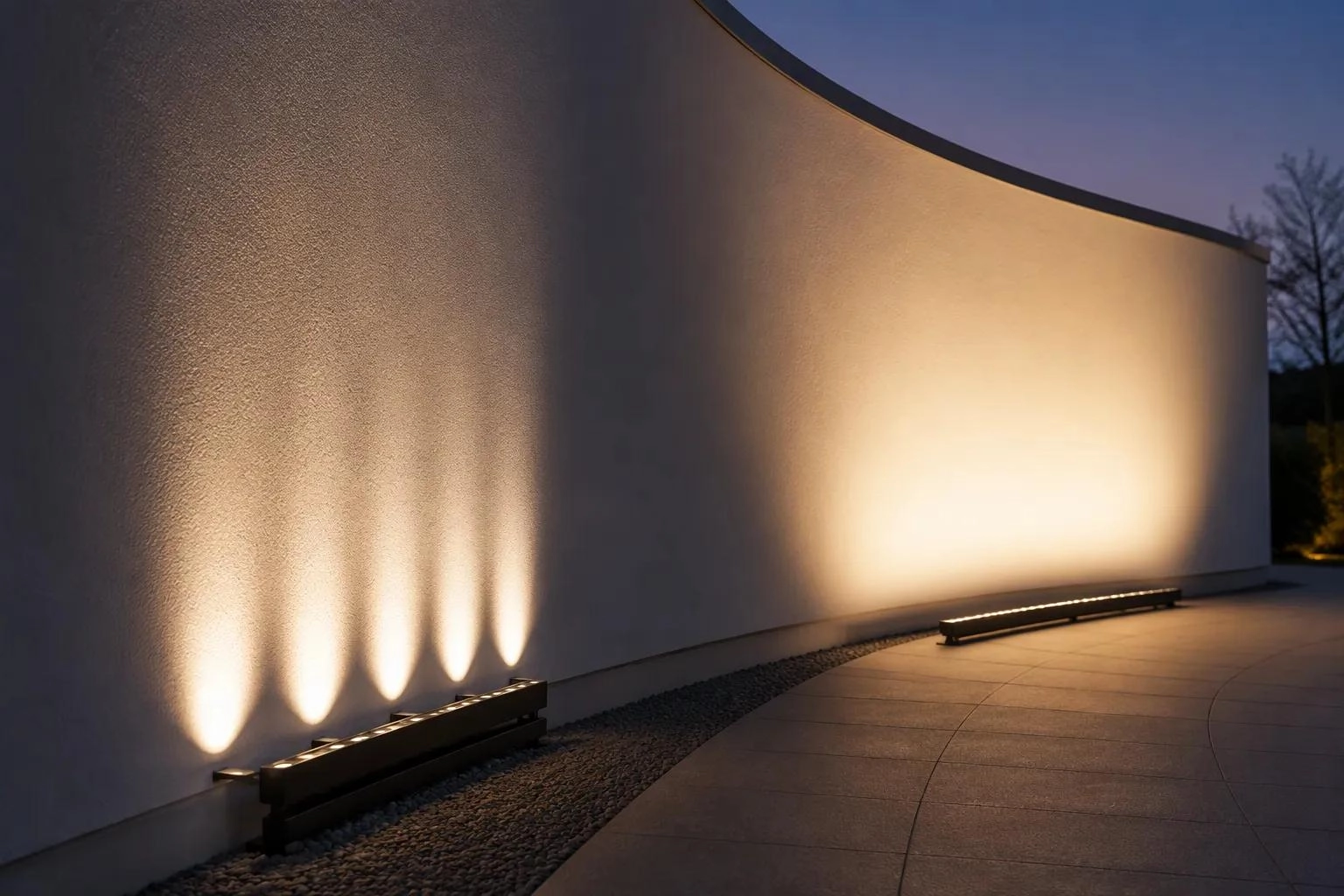
Close mounting delivers stronger intensity on the wall. The fixture sits near the surface, so more light lands where viewers see it. This setup gives tight hotspot control on gentle curves. A designer can aim the beam with precision and keep the pool of light where it belongs. Close mounting suits accent work, entry zones, and facades viewed from a short range.
The trade-off is real. A close fixture covers less wash height. It also shows scalloping more readily when spacing is off. Small gaps between units become visible bright-and-dark bands. Teams that choose close mounting must tighten spacing and verify the layout on site. Careful wall washing at close range rewards that discipline.
Far mounting produces a broader, smoother wash. Coverage rises, and the light blends across a larger area. Intensity on the wall drops, though. The beam must travel farther, so beam control becomes more demanding. A wide, soft wash looks elegant from a distance and flat up close.
Brightness should match viewing distance. A facade seen from across a street needs different intensity and beam control than one viewed at arm's length. Viewers far away read the overall pattern. Viewers nearby read every hotspot and seam. Designers should also weigh symmetric versus asymmetric optics against the mounting distance and setback. Asymmetric optics push light along the wall and support even illumination on curved facades. Symmetric optics suit centered, balanced layouts.
Each approach fits a different job. Close mounting serves detail, accent, and short viewing ranges. Far mounting serves broad coverage and long viewing ranges. Neither wins outright. The right choice depends on the effect, the viewer's position, and the geometry of the wall.
Good flexible facade wall washing often mixes both. A flexible wall washer set close handles a feature wall. A flexible wallwasher set farther out handles the long run above it. One flexible wall washer can anchor a tight detail, while flexible wall washers across the span carry the broad wash. This blend keeps wall washing consistent from ground to roofline.
Project type guides the call as well. Led wall washer lighting for high rise building facade work usually favors far mounting, since viewers stand far below. A curved feature wall at eye level often favors close mounting. A wallwasher on a tight radius needs closer spacing whatever the setback. Designers who match the setup to the viewing condition protect both impact and efficiency.
The curved case deserves special care. A curved surface changes the setback along the run, so a fixed distance rarely holds everywhere. Teams should check the setback at several points and adjust spacing to match. That step keeps wall washing smooth around the bend and avoids sudden bright patches. It also protects the fixture from stress when the geometry shifts.
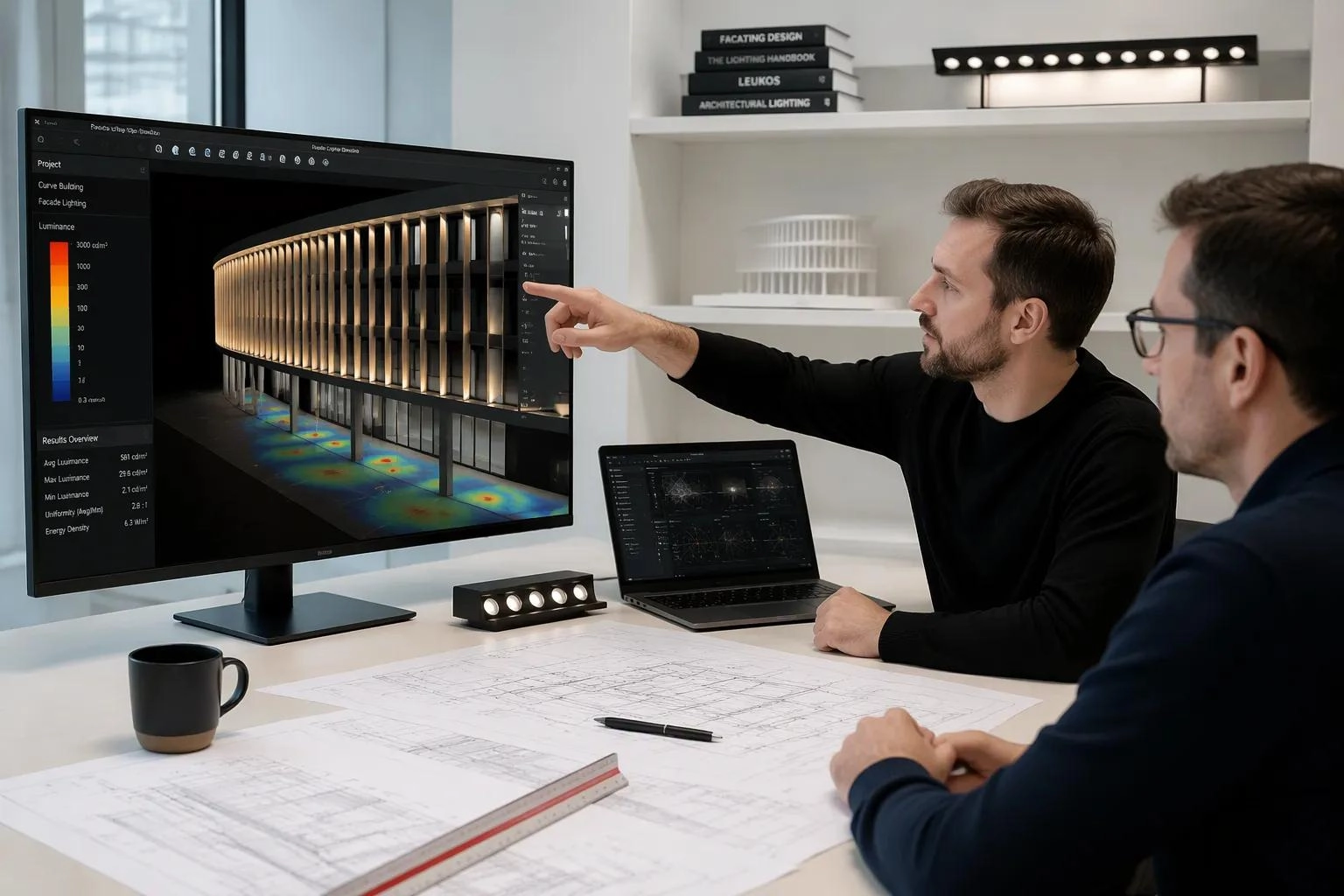
A reliable plan follows a fixed sequence. First, measure the facade dimensions and the curve radius at several points along the run. Second, define the desired effect and the viewing distance. Third, pick a candidate beam angle that suits that effect. Fourth, run a lighting simulation before anyone drills a hole.
Simulation tools such as DIALux or AGi32 let a team test fixture spacing, the mounting distance from the facade surface, and the beam angle for flexible LED wall washers on curved facades. The software shows where hotspots form and where coverage falls short. Teams can compare two or three layouts in an afternoon instead of guessing on a scaffold.
Project teams should also send facade dimensions, the planned mounting distance, and lighting requirements to the manufacturer. That data lets the supplier match specifications to the curved facade geometry. NOVANEON offers technical support from concept to installation, which helps a team confirm the optimal offset before production begins.
Consider a gentle curve on a mid-rise facade, viewed from street level. The team selects a mid-width beam and simulates two setbacks. At the closer setback, the wash reaches partway up the wall with strong intensity and visible scalloping between units. At the farther setback, coverage climbs higher and the light blends smoothly, but wall intensity drops. The simulation confirms the farther setback suits the viewing distance, and the team tightens spacing slightly to close the gaps.
This example is illustrative, not manufacturer data. It shows the method: change one variable, read the result, then adjust. A curved facade led wallwasher rarely holds one distance everywhere, so the team checks the setback at several points around the bend. Each check protects even illumination and steady lighting performance.
A mockup on site closes the loop. Real facades rarely match the drawing, and a short test run reveals what simulation cannot. That final check protects both the visual result and the fixture itself.
Distance is a design decision, not a universal spec. Beam angle, curve radius, and the desired effect together set the right figure for each project. Teams that treat mounting as a fixed number invite uneven wall washing and wasted output.
Simulation and an on-site mockup close the gap between drawing and reality. Real facades rarely match the plan, so a short test run reveals what software cannot about wall washing. That step protects wall washing quality across the whole run. It also protects the fixture itself, since a well-planned flexible wall washer avoids stress on a curved surface. Careful testing safeguards both the visual result and long-term wall washing performance.
Please provide the following detailed information so that our business representatives can better understand your needs and get in touch with you as soon as possible.