

 EN
 English
 繁体中文
 Italian
 Greek
 Spanish
 Hebrew
 Japanese
 Portuguese
 Korean
 Russian
 French
 German
 Arabic
Blog & Events
Follow NOVANEON for more valuable information to know early
Follow NOVANEON for more valuable information to know early
Oct 09Source: Views: 185
Verifying certifications means checking three things: authenticity, scope, and relevance. A certificate logo on a spec sheet proves nothing until the buyer confirms the issuer, the covered product, and the validity date.
This principle applies equally when a buyer chooses an led neon flex supplier or an led neon strip supplier. Certificates from a company may claim compliance, yet without verification they remain marketing claims. An expired document or a mark that belongs to another product line can easily mislead buyers.
This article provides a step-by-step verification process, the red flags to watch for, and a buyer checklist for evaluating supplier documentation.
· Always verify certificate authenticity, scope, and relevance before trusting a supplier.
· Check IP ratings to ensure waterproofing matches your installation needs.
· Request test reports to confirm actual product performance, not just certificates.
· Conduct factory audits or third-party inspections to see real manufacturing practices.
· Use a pre-order checklist to avoid expired or mismatched documents.
Certifications shield buyers from serious risks. Electrical hazards rank among the most dangerous. A non-compliant led neon flex product can overheat, short-circuit, or cause fires. Proper certifications confirm that a product meets safety standards for insulation, voltage tolerance, and thermal management.
Failed imports represent another major risk. Customs officials reject shipments without valid compliance documents. This rejection leads to delays, storage fees, and lost sales. Liability claims also pose a threat. If a product causes property damage or injury, the buyer may face legal action. Valid certifications transfer part of that risk back to the manufacturer.
Regulatory compliance varies by region. North America requires UL or ETL marks. Europe demands CE marking. A reliable led neon strip manufacturer understands these differences and provides the right documents for each market.
Buyers encounter several traps when reviewing certificates. Expired documents rank as the most common problem. A certificate may look official, yet its validity date has passed. Always check the issue and expiration dates.
Some suppliers borrow certificates from a sister factory. The document belongs to another facility, not the one producing the quoted goods. Other suppliers present certificates for a different product line. A certificate for LED panels does not cover led neon flex products.
A trustworthy led neon flex supplier also provides clear warranty terms. Strong manufacturer reputation matters too. These factors signal strict quality control and genuine quality assurance. Buyers should treat certifications as one part of a larger evaluation. Product quality depends on both documented compliance and real manufacturing practices.
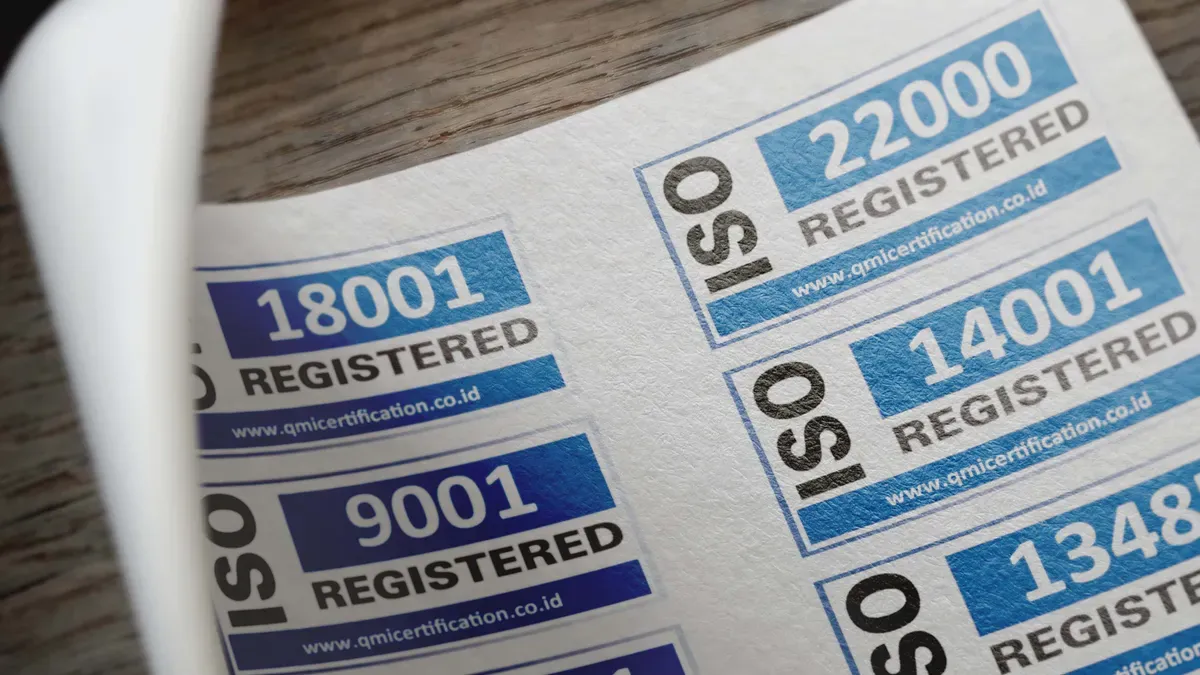
Safety marks form the foundation of any certification review. Underwriters Laboratories (UL) and ETL both verify electrical safety for North American markets. These marks confirm that a product meets established industry standards for insulation, wiring, and thermal performance. European buyers rely on CE marking, which signals conformity with health, safety, and environmental protection requirements. The RoHS directive restricts hazardous substances such as lead and mercury in electronic components. ErP addresses energy efficiency and eco-design requirements for lighting products.
A supplier should provide an EU Declaration of Conformity alongside EN 55015 EMC test reports and EN 62471 photobiological safety reports. These documents demonstrate full compliance with European regulations. Buyers should also request RoHS and REACH statements for complete substance control verification.
Ingress protection ratings define how well a product resists dust and water. The first digit indicates solid particle protection, while the second digit covers moisture resistance. For outdoor led neon flex installations, ip ratings become critical selection criteria. IP65 handles splashes and rain from covered areas. IP67 withstands temporary submersion up to about 1 meter for 30 minutes. IP68 supports continuous immersion, making it the best choice for pools, fountains, and water features. A true ip68 led strip typically carries a submersion rating of 1.5 to 2 meters.
IP Rating | Protection Level | Outdoor Suitability |
IP20 | Basic dust protection, no moisture resistance | Indoor only |
IP44 | Splash-proof from all directions | Not for exposed exterior use |
IP65 | Dust-tight, protected against low-pressure water jets | Covered outdoor areas only |
IP67 | Dust-tight, withstands temporary submersion | Minimum for outdoor neon strips |
IP68 | Dust-tight, rated for continuous water contact | Best for all outdoor connectors |
The circuit is only as waterproof as its lowest-rated component. An IP67 strip connected with IP20 splice connectors results in an IP20 installation.
Buyers evaluating ip67 or ip68 waterproof ratings should confirm that every connector and junction matches the strip rating. For coastal or marine environments, UV-resistant construction requires separate verification. ASTM G154 and ASTM G155 test reports should state the lamp type, irradiance, exposure cycle, and total duration. A report claiming only "1000 hours UV test: pass" provides insufficient detail.
Process certifications demonstrate manufacturing discipline. ISO 9001:2015 confirms a functioning Quality Management System. ISO 14001 covers environmental management. These certifications apply to specific legal entities and manufacturing locations. Buyers should verify that the certificate names the exact factory producing their order.
Customization and private label options represent additional evaluation criteria. A supplier with strong product quality and flexible production capabilities can adapt designs while maintaining compliance. Global certifications such as UL, CE, and RoHS travel across markets, but each destination may require specific documentation. Requesting model-specific test reports ensures that certificates cover the exact configuration quoted.

Buyers should start by requesting the full set of quality assurance documentation from the supplier. This request includes certificates, test reports, and declarations of conformity. A legitimate led neon flex supplier provides these documents without hesitation.
The UL certification process follows a defined path. The manufacturer submits the product to UL with complete documentation, including specifications, component details, manufacturing location, and test equipment details. A dedicated UL project engineer evaluates the product against applicable standards. Product samples undergo testing at a UL facility to confirm compliance with safety and performance requirements. If the product passes, UL issues a certification and assigns a file number, authorizing the manufacturer to apply the mark. UL conducts ongoing factory audits through its Follow-Up Services program to ensure continued compliance. This status is mandatory and maintained, not a one-time approval.
When inspecting certificates, buyers should confirm several details. The certificate must show the company name, address, certificate number, standard, scope, original issue date, current validity, and certification body. The company name on the certificate should match the supplier quotation or invoice entity. The certificate address must match the actual production site. The scope should cover manufacturing or PCB-related work, not just trading or sales. Buyers should check that the expiry date has not passed and that surveillance status is clear. Low-resolution, cropped, or missing certificate numbers warrant rejection. A supplier's refusal to provide registry or certification-body information signals a red flag.
Online verification separates genuine certifications from fabricated documents. Buyers should verify UL evidence through UL Product iQ rather than relying on a PDF attached to an email. For CE/UL certifications, the issuing body maintains a public database. Buyers can enter the certificate number and confirm the product scope, validity dates, and manufacturing location.
Cross-referencing certificates against independent test reports adds another layer of confidence. A certificate confirms that a product passed a standard test. A test report shows the actual results. Buyers should request both documents and compare the model numbers, test dates, and standards referenced. Mismatched model numbers between the certificate and the quoted led neon flex product indicate a problem.
Compliant packaging and laser marking support smooth import compliance. Customs officials check product labels, packaging marks, and laser-etched certification numbers. A supplier that provides proper marking reduces the risk of shipment delays. Buyers should confirm that the packaging carries the required certificates and that the product itself bears permanent marking where applicable.
For products destined for hazardous environments, the marking format follows a defined structure. ATEX-certified equipment must bear a marking that buyers can inspect field by field: CE, Notified Body Number, Ex, Equipment Group, Category, Protection Type, Gas Group, Temperature Class, and EPL. A worked example is II 2G Ex d IIB T4 Gb. This decodes as Group II (surface industry), Category 2 (Zone 1/2), Gas atmosphere, flameproof protection, Gas Group IIB, T4 (135°C max surface temperature), and Equipment Protection Level b (Zone 1). The CE marking must come from an EU Notified Body. Key EU Notified Bodies for ATEX certification include DEKRA, SGS, DNV, and BV. Their certificates can be checked in Notified Body certificate databases.
Certificates alone cannot confirm that a factory follows consistent production practices. Buyers should arrange factory audits or commission third-party inspections to see how a supplier actually operates. An independent inspector visits the production site, reviews records, and checks whether the facility matches the documents. This step reveals gaps between what a led neon flex supplier claims and what happens on the floor.
Third-party inspections also test sample units for brightness, color temperature, color rendering, heat dissipation, and flexibility. Inspectors examine soldering quality and packaging details. These checks go beyond certifications and reveal real product quality. A reliable led neon strip manufacturer welcomes such scrutiny and provides access to production areas.
A factory visit gives buyers direct evidence of supplier capability. Several indicators matter most:
· Production lines: automated equipment signals capacity and consistency. Manual processes may introduce variation.
· Quality control processes: aging tests, constant temperature and humidity tests, and photoelectric performance tests show a commitment to strict quality control. Equipment such as integrating spheres and spectrum analyzers supports accurate measurement.
· R&D capability: a professional team with expertise in optics, structural engineering, and electronics can handle customization requests. Patents offer measurable proof of innovation.
· Years in business: longevity suggests stability and accumulated manufacturing knowledge.
NOVANEON illustrates these qualities. Founded in 2016 in Shenzhen, the company holds ISO 9001 certification along with CE, RoHS, IP68, and UL certifications. It has earned more than 19 authorized patents, including 15 product patents. The factory covers approximately 5000 square meters. NOVANEON attended CEDIA EXPO 2025 in the United States, demonstrating engagement with international markets. These facts give buyers concrete reference points when evaluating a potential partner.
Buyers should also request samples and test them personally. A supplier that responds quickly to technical inquiries and provides detailed datasheets demonstrates transparent communication. Warranty terms of 3 to 5 years and clear after-sales responsibilities in the contract further support quality assurance. These non-certification factors complete the credibility picture.
Before placing an order, buyers should collect a complete document package from any led neon flex supplier. This package includes certificates, test reports, warranty terms, and packaging compliance records. Each document requires careful review.
Buyers should confirm certificate authenticity first. The company name on each document must match the quotation or invoice entity. The address must match the actual production site. Certificate numbers should be verifiable through the issuing body's public database.
Certification Indicator | What It Covers |
CE | Product complies with applicable European health, safety, and environmental protection standards |
RoHS | Restriction of Hazardous Substances — limits use of specific hazardous materials in electrical/electronic products |
cUL | Certified by Underwriters Laboratories for the Canadian market |
UL | Certified by Underwriters Laboratories for the US market |
Power Supply Certification | Power supplies specifically should be cUL and UL certified for electrical safety |
Scope verification follows. The certificate must cover the exact led neon flex model quoted. A document for a different product line does not apply. Validity dates matter too. Expired certificates offer no protection.
Warranty terms deserve equal attention. A reliable led neon strip manufacturer provides clear warranty language. Material warranties typically cover 12 months from shipment. LED component warranties follow the component maker's terms, often 2 to 3 years. Some suppliers offer longer coverage. Flexfire LEDs provides 7 to 15-year warranties on LED strips. LEDYi offers 3 to 5-year warranties. Buyers should request the LED datasheet with every order.
Packaging compliance completes the checklist. Labels and laser markings must match certification records. Proper marking supports smooth customs clearance.
Certain warning signs should end negotiations immediately. A supplier who refuses to share test reports raises serious concerns. Test reports show actual performance results. Certificates alone confirm only that a product passed a standard test.
Mismatched model numbers between certificates and quoted products signal trouble. The led neon flex product must appear on the certificate by exact model designation. Unverifiable certificate numbers also warrant rejection. Buyers should check every number against the issuing body's registry.
Vague warranty language creates risk. Terms like "limited warranty" without specifics leave buyers unprotected. A trustworthy supplier states exclusions clearly. Common exclusions include improper installation, voltage mismatch, and unauthorized modifications.
Anything sold as neon needs one question asked before it ships: glass, or LED flex.
Buyers should also confirm the technology. Many products sold as neon are actually led neon flex — low-voltage LED strips inside bendable polymer tubing. Products like SloanLED's FlexiBRITE run on 24VDC and contain no gas or glass. Confirming the technology prevents costly mistakes.
Verification rests on three questions. Is the certificate authentic? Does its scope cover the quoted product? Does it apply to the relevant market and model? Buyers who answer these questions protect themselves from expired documents, borrowed certificates, and mismatched product lines.
Certificates open the conversation. They do not close it. Audits, independent test reports, and factory visits complete the picture. A led neon flex supplier earns trust through transparency, not paperwork alone.
Apply the checklist before every order. Treat verification as an ongoing habit. Standards change, factories relocate, and product lines evolve.
Request certificates and test reports from a current or prospective supplier today. Compare each document against the checklist. Confirm authenticity, scope, and relevance before signing anything.
A buyer checks the certificate number in the issuing body's public database. UL Product iQ verifies UL marks. Notified Body databases confirm ATEX documents. The company name and address on the certificate must match the quotation and the production site. Cropped or low-resolution documents warrant rejection.
IP ratings define dust and water protection. IP67 withstands temporary submersion up to about 1 meter for 30 minutes. IP68 supports continuous immersion, which suits pools and fountains. A true ip68 led neon flex product typically carries a submersion rating of 1.5 to 2 meters. Connectors must match the strip rating.
North American buyers need UL or ETL marks for electrical safety. European buyers rely on CE marking, RoHS for substance limits, and ErP for energy efficiency. A supplier should also provide an EU Declaration of Conformity with EN 55015 and EN 62471 test reports. These documents confirm full regulatory compliance.
Certificates confirm that a product passed a standard test. Test reports show the actual results. Buyers should compare model numbers, test dates, and standards across both documents. Mismatched model numbers between a certificate and the quoted led neon flex product signal a problem. Refusal to share test reports should stop the deal.
Buyers should arrange third-party inspections or factory visits. Automated production lines, aging tests, and photoelectric performance equipment demonstrate real capability. An R&D team with optics and electronics expertise supports customization. NOVANEON, founded in 2016 in Shenzhen, holds ISO 9001, CE, RoHS, IP68, and UL certifications, with 19+ authorized patents and a 5000 sqm factory.
Please provide the following detailed information so that our business representatives can better understand your needs and get in touch with you as soon as possible.