
 EN
EN
 English
 繁体中文
繁体中文 Italian
 Greek
Greek Spanish
 Hebrew
 Japanese
 Portuguese
 Korean
 Russian
 French
 German
 Arabic
Blog & Events
Follow NOVANEON for more valuable information to know early
Follow NOVANEON for more valuable information to know early
Sep 15Source: Views: 2
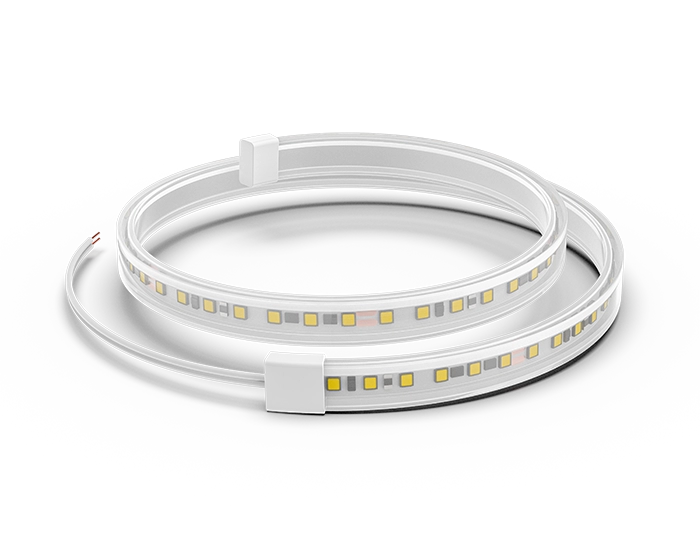
Heavy-Duty Underground LED flex is a sealed, flexible LED strip designed for burial or in-ground use. It directly addresses the core problem with conventional walkway and landscape lighting: fragility, high maintenance expenses, and design rigidity. For public spaces like walkways and landscapes, this solution brings four key advantages. It offers exceptional durability against moisture, dirt, and physical impact. It enhances safety by producing soft, low-glare illumination that reduces accident risks. It operates with high energy efficiency, cutting electricity costs compared to older technologies. Finally, its 3D bending capability allows limitless design freedom for curved paths and irregular sites. These qualities make it a superior choice for pedestrian areas.
· Heavy-Duty Underground LED Flex is sealed and flexible, designed for burial or in-ground use.
· It offers exceptional durability against moisture, dirt, and physical impact, with an IP68 rating.
· The soft, low-glare light enhances safety by reducing accident risks on walkways.
· Its 3D bending capability allows limitless design freedom for curved paths and irregular sites.
· Energy efficiency and long lifespan cut electricity costs and maintenance expenses over time.
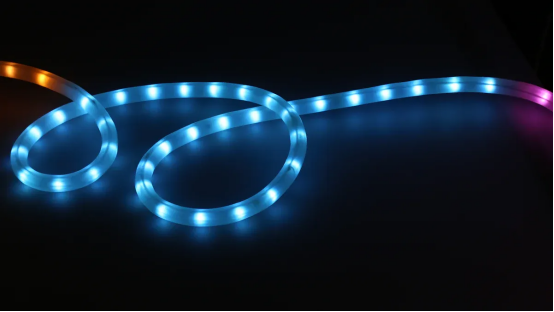
Heavy-Duty Underground LED flex refers to a specialized category of flexible LED lighting built for direct burial or in-ground installation. NOVANEON offers a complete product line for these demanding applications, including the NH1617S-IP68 model. These strips combine flexible neon tubing with robust sealing to withstand moisture, dirt, and physical stress. Unlike standard indoor LED strips, these products meet rigorous standards for outdoor and submerged use. Designers and contractors choose this technology when they need durable, long-lasting illumination in public walkways and landscapes.
The defining feature of Heavy-Duty Underground LED flex is the IP68 rating. This rating guarantees complete protection against dust ingress. It also certifies continuous immersion in water beyond one meter depth. NOVANEON's NH1617S-IP68 model exemplifies this construction. It uses a dual-color silicone extrusion that resists UV radiation and yellowing over time. The strip also passes salt-mist proof testing. It undergoes chlorine-resistant immersion testing. Additional corrosion testing follows IEC60598-2-18 standards. These protections make the strip suitable for swimming pools, seashore environments, and ground installation in demanding public spaces.
The table below summarizes key specifications for this model.
Category | Specification |
Product Type | Side-bending, top-lighting LED flexible neon |
LED Type | Enhanced 5050 LED |
Construction | Dual-color silicone extrusion |
Durability Features | UV and yellowish resistant; IP68 and salt-mist proof; chlorine-resistant immersion tested; IEC60598-2-18 corrosion tested |
Lifespan | L70B50 > 50,000 hours |
Min. Bending Radius | 10 cm |
Ambient Temperature Range | -40℃ to +55℃ |
Supply Voltage | 24.0 ± 1.0 VDC |
IP Rating | IP68 |
The strip achieves a minimum bending radius of 10 centimeters. This 3D bending capability allows installers to follow curved paths. They can wrap the strip around columns or trace irregular landscape contours. No other linear lighting method matches this flexibility for tight-radius turns. The silicone construction also maintains performance across a wide temperature range. The strip operates from -40℃ to +55℃ ambient. It stores safely from -40℃ to +85℃. This range covers extreme climates worldwide.
Standard LED strips lack the sealing and construction needed for underground use. Most carry an IP20 or IP65 rating. They cannot survive direct burial or submersion. Heavy-Duty Underground LED flex uses silicone extrusion and injection-molded IP68 connectors. These connectors include power feed and end cap options with side feed, bottom feed, and end feed configurations. The enhanced 5050 LEDs deliver consistent brightness over a rated lifespan of L70B50 greater than 50,000 hours. That lifespan means less frequent replacement in public installations.
Power consumption varies by color configuration. The chart below compares per-meter power draw across five variants.
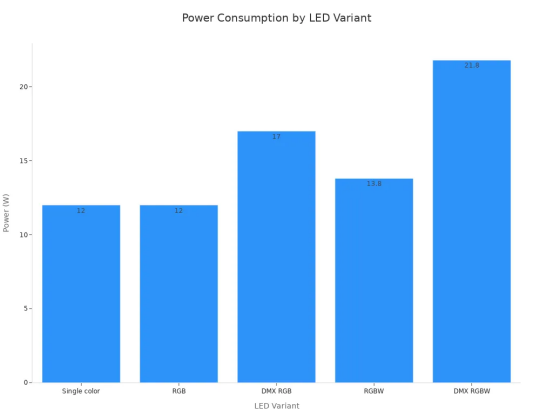
Single color and RGB versions consume 12 watts per meter. DMX RGB variants draw 17 watts per meter. RGBW versions use 13.8 watts per meter. DMX RGBW variants draw 21.8 watts per meter. This range allows designers to select the right balance of brightness and energy use. The product also offers flexible cutting options. Single color strips cut every 25 millimeters. RGB and DMX variants cut every 83.3 millimeters. Installation accessories include PC clips, aluminum profiles, and silicone diffusers for in-ground use. These accessories simplify mounting and protect the strip from mechanical damage. For public walkways and landscapes, this durability translates to fewer replacements and lower maintenance costs over the life of the installation.
Public walkways and landscapes demand lighting that survives constant exposure to weather, foot traffic, and environmental stress. Heavy-Duty Underground LED flex meets this challenge through robust construction and sealed protection. Manufacturers commonly build path lights from heavy-duty cast brass and sturdy aluminum. These materials resist corrosion, impact, and wear from daily use. The IP68 rating on underground LED flex adds another layer of defense. It seals the strip against dust and continuous water immersion. This combination delivers exceptional longevity in demanding public environments.
The rated lifespan of these products reaches L70B50 greater than 50,000 hours. That figure means the LED maintains at least 70 percent of its initial brightness after 50,000 hours of operation. Public agencies benefit from fewer replacements and lower labor costs over the installation's life. The silicone extrusion also resists UV radiation and yellowing. It passes salt-mist and chlorine immersion testing. These features keep the lighting performing reliably near pools, fountains, and coastal walkways.
Safety remains a top priority for pedestrian areas. Heavy-Duty Underground LED flex produces a soft warm light that protects the eyes and reduces glare. This gentle illumination helps visitors navigate paths without discomfort or temporary vision loss. The low-glare output also minimizes tripping hazards in parks and plazas. Designers can specify different color temperatures to match the mood of a space. Warm tones create inviting atmospheres for evening strolls.
Energy efficiency sets these systems apart from older technologies. LED flex consumes far less power than halogen or fluorescent systems. A single-color strip draws only 12 watts per meter. This low draw translates to significant electricity savings across large public installations. The 3D bending capability allows the strip to follow curved paths and wrap around columns. Installers can trace irregular landscape contours without custom fixtures. This design freedom lets architects create unique lighting layouts that traditional rigid fixtures cannot achieve.
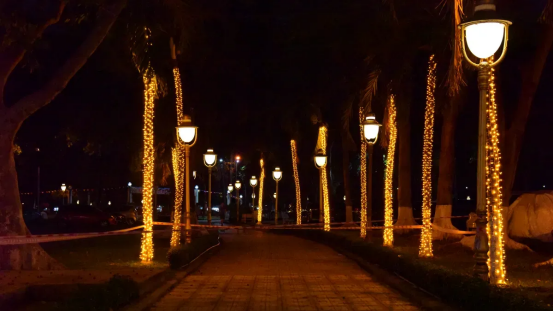
Public walkways need lighting that guides visitors safely without creating glare or dark gaps. Heavy-Duty Underground LED flex installs flush with the ground along pedestrian paths, plazas, and promenades. The strip follows the curve of a walkway and marks its edges with steady, even light. Designers also use it for driveways and pathways where vehicles and foot traffic share space. The sealed construction handles pressure from above and moisture from below at the same time.
Plazas and promenades often feature decorative elements that demand flexible lighting. Installers can wrap the strip around planters, steps, and seating walls. The 3D bending capability allows tight turns that rigid fixtures cannot match. For projects that need color changes or dynamic scenes, DMX512 control RGB recessed pathway and deck lights offer a programmable option. These fixtures sit flush with the surface and deliver color without trip hazards. Facade lighting represents another common use. The strip traces building outlines and highlights architectural details after dark.
Parks and gardens present irregular terrain and organic shapes. Heavy-Duty Underground LED flex adapts to these conditions because it bends and seals against the elements. Installers route the strip along garden beds, tree lines, and stone borders. Flexible LED neon rope lights installed on trees in public parks create a striking visual effect. They wrap around trunks and branches to add ambient light without harsh hotspots. This technique draws attention to mature trees and extends the lighting design into the canopy.
Water features require the highest level of protection. Pools, fountains, and decorative ponds expose lighting to constant moisture and chemical treatment. The IP68 rating on NOVANEON's underground flex line allows direct submersion. Chlorine-resistant immersion testing and salt-mist proof construction support use in these environments. The same product serves facade lighting, driveway edges, and pathway borders across a single site. Designers gain one reliable solution for many applications. That consistency simplifies specification and reduces the number of distinct fixtures a project needs.
Proper site preparation determines how well any in-ground lighting system performs over time. Contractors should excavate a stable trench, compact the base, and confirm drainage before setting fixtures. Quick-connect systems make heavy-duty underground LED lights user-friendly to install. These connectors reduce wiring time and lower the risk of moisture entering the seal. Installers simply plug the power feed into the strip and lock the connection.
Flush-with-ground installation for inground LED uplights offers clear advantages. Fixtures sit level with the walking surface, so pedestrians pass over them without tripping. A commercial office park driveway in Shenzhen used flush-mounted ground lights under light vehicle traffic for 36 months with zero fixture replacements. That project also eliminated roughly 160 bulb service calls per year. A municipal plaza pathway in Dongguan ran recessed trim fixtures near a fountain for 18 months with no replacements. Only two fixtures needed cleaning because debris collected in the recessed trim.
Material choice matters for long-term durability. The table below compares common housing options.
Material | Corrosion Resistance | Structural Load Rating | Best Environment |
304 Stainless Steel | Good — inland, standard soil | High — drive-over capable | Gardens, plazas, driveways (inland) |
316 Stainless Steel | Excellent — coastal, chloride soil | High — drive-over capable | Coastal projects, pool decks, fountain areas |
Brass | Very Good — develops patina | Moderate — pedestrian traffic | Heritage sites, warm-tone landscape designs |
Die-cast Aluminum | Moderate — needs coating | Low — not for exposed use | Internal heatsink use only |
IP68-rated fixtures require minimal maintenance beyond periodic cleaning and inspection. Crews should wipe the lens, clear debris from recessed trim, and check connector seals during routine rounds. Quality LED outdoor lights, with proper care, can last 10 to 15 years. Cooler operation and resilient components explain that lifespan. A halogen ground light lasts only 2,000 to 4,000 hours and needs 8 to 10 bulb replacements over a decade. LED inground fixtures need none.
"LED inground lighting should be a buried asset, not a disposable item. To do this, the fixture, the thermal conduit, the optical combination, the ingress protection all need to work on a 10yr cycle. When not, you're replacing ground lights every 18 months -and turning a capital expense into an operations expense."
Troubleshooting usually starts with the connection point. Loose quick-connect fittings cause most intermittent failures. Inspectors should verify voltage at the feed, then check for water intrusion at the end cap. Heavy-Duty Underground LED products resist salt mist, chlorine, and corrosion, so seal failure is rare when installers follow mounting guidance.
Traditional lighting systems struggle in public walkways and landscapes for several reasons. Halogen and fluorescent fixtures rely on fragile glass envelopes and exposed wiring. These components break under foot traffic, moisture, and temperature swings. A halogen ground light lasts only 2,000 to 4,000 hours. That short life forces crews to replace bulbs repeatedly. Fluorescent systems face similar problems. They contain mercury, perform poorly in cold weather, and degrade quickly in damp conditions.
Conventional LED systems improve efficiency and lifespan, but most standard strips carry only an IP20 or IP65 rating. They cannot survive direct burial or continuous submersion. Poor durability leads to over 60% light loss in one year for many outdoor installations. Maintenance costs climb as fixtures fail. Selection also becomes difficult when small manufacturers cannot meet customized requirements or deliver on schedule.
The table below compares the three legacy options against Heavy-Duty Underground LED flex.
Feature | Halogen | Fluorescent | Conventional LED | Underground LED Flex |
Lifespan | 2,000–4,000 hours | Moderate | Varies by build | L70B50 > 50,000 hours |
Waterproofing | None | Poor | IP20–IP65 | IP68 |
Durability | Fragile glass | Fragile tubes | Limited sealing | Sealed silicone extrusion |
Glare Control | High glare | Moderate glare | Varies | Soft, low-glare output |
Heavy-Duty Underground LED flex outperforms these alternatives on every critical measure. The IP68 rating allows direct burial and continuous immersion. Halogen and fluorescent fixtures cannot match this protection. The rated lifespan exceeds 50,000 hours, which eliminates the frequent bulb changes that halogen systems demand.
Solar lighting solutions exist for parks and trails. They reduce wiring costs and support sustainability goals. However, solar fixtures may not match IP68 performance. Their batteries and panels add failure points. They also depend on sunlight, which limits reliability in shaded or cloudy locations.
Glare control separates professional-grade fixtures from standard streetlights. Commercial LED bollard lights often use full cutoff optics that aim light downward. This design cuts glare and concentrates illumination on the path. Frosted lenses and louvered diffusers further soften bright spots. The result is even light distribution along walkways. Ground-level, glare-controlled lighting helps define paths, driveways, and entryways. It lowers the chance of tripping, collisions, or wandering into dark areas. In parking lots and pedestrian zones, it improves wayfinding and makes drivers and cyclists more aware of people on foot. Overhead streetlights may leave ground-level obstacles less visible.
Robust construction reinforces these advantages. LED bollards and in-ground fixtures resist impact, corrosion, and moisture. Traditional hard fixtures cannot conform to curved surfaces, which forces complex installation. Underground LED flex bends around columns and follows irregular contours without custom parts. Large-scale wall lighting with traditional fixtures often suffers from color inconsistency and insufficient color rendering. The sealed silicone extrusion on underground flex maintains consistent color and brightness across the entire run.
Public agencies often hesitate when they see the purchase price of heavy-duty underground LED flex. The initial investment may exceed that of traditional halogen or fluorescent fixtures. However, that comparison ignores the full cost of ownership over time. Energy and maintenance savings quickly offset the higher upfront expense.
A single-color strip draws only 12 watts per meter. Halogen and fluorescent systems consume far more electricity for the same light output. Maintenance tells an even stronger story. A halogen ground light lasts only 2,000 to 4,000 hours. Crews must replace bulbs 8 to 10 times over a decade. LED inground fixtures need none of that labor. One commercial office park driveway in Shenzhen eliminated roughly 160 bulb service calls per year after switching to flush-mounted ground lights. That project ran for 36 months with zero fixture replacements. Labor savings alone can dwarf the initial price gap.
A simple payback framework helps decision-makers justify the investment. The formula is straightforward: payback period equals total installation cost divided by annual energy and maintenance savings. A project that costs more upfront but saves money every year will reach payback within a predictable window.
Consider a municipal plaza pathway. The installation cost includes fixtures, connectors, and labor. Annual savings come from reduced electricity bills and fewer service calls. Divide the first number by the second to get the payback period in years. A shorter period means faster return. Rigorous testing and certifications back NOVANEON products. These credentials reduce replacement risk and protect the calculated savings. A municipal plaza pathway in Dongguan ran recessed trim fixtures near a fountain for 18 months with no replacements. Only two fixtures needed cleaning. That reliability keeps the payback calculation honest. Public projects that specify certified, IP68-rated products avoid the hidden costs of premature failure. Over a 10- to 15-year service life, the total savings can far exceed the original purchase price.
Planners weighing options for public walkways and landscapes should judge four criteria together: durability, safety, design flexibility, and lifetime cost. Heavy-Duty Underground LED flex satisfies each one. Sealed construction survives burial and moisture. Soft, low-glare output protects pedestrians. Three-dimensional bending follows any contour. Energy and maintenance savings offset the higher purchase price over a decade of service.
Adoption trends support this direction. Municipalities increasingly invest in LED-based street lighting to improve safety, traffic visibility, and energy efficiency. Analysts project the market could reach roughly 92% adoption within a decade. That momentum favors sealed, in-ground products in future municipal and landscape projects.
IP68 certifies complete dust protection and continuous immersion beyond one meter of water. NOVANEON's underground flex line passes salt-mist, chlorine immersion, and IEC60598-2-18 corrosion testing. This protection allows direct burial in soil and submersion in pools or fountains without seal failure.
Yes. The silicone extrusion bends in three dimensions with a minimum radius of 10 centimeters. Installers follow curved walkway edges, wrap columns, and trace irregular garden contours. Rigid fixtures cannot match this range, so designers avoid custom parts for odd shapes.
The rated lifespan is L70B50 greater than 50,000 hours. The strip holds at least 70 percent of its initial brightness across that period. Halogen ground lights last only 2,000 to 4,000 hours, so crews replace those bulbs many times over the same span.
The product operates from -40℃ to +55℃ ambient and stores safely from -40℃ to +85℃. UV-resistant silicone prevents yellowing under strong sunlight. These ratings cover hot desert plazas, cold mountain trails, and coastal installations exposed to salt air.
IP68 fixtures need little beyond periodic cleaning and inspection. Crews wipe the lens, clear debris from recessed trim, and check connector seals. Loose quick-connect fittings cause most intermittent faults, so inspectors verify voltage at the feed and watch for water at the end cap.
Please provide the following detailed information so that our business representatives can better understand your needs and get in touch with you as soon as possible.