
 EN
EN
 English
 繁体中文
繁体中文 Italian
 Greek
Greek Spanish
 Hebrew
 Japanese
 Portuguese
 Korean
 Russian
 French
 German
 Arabic
Blog & Events
Follow NOVANEON for more valuable information to know early
Follow NOVANEON for more valuable information to know early
Oct 08Source: Views: 3
Heat causes the light-emitting diode to degrade. Keeping junction temperature low through proper thermal management is the most effective way to maximize lifespan. A custom LED flex manufacturer can recommend heat dissipation strategies for indoor flex profiles. The situation resembles a running engine: without cooling, it overheats and fails. These components behave similarly.
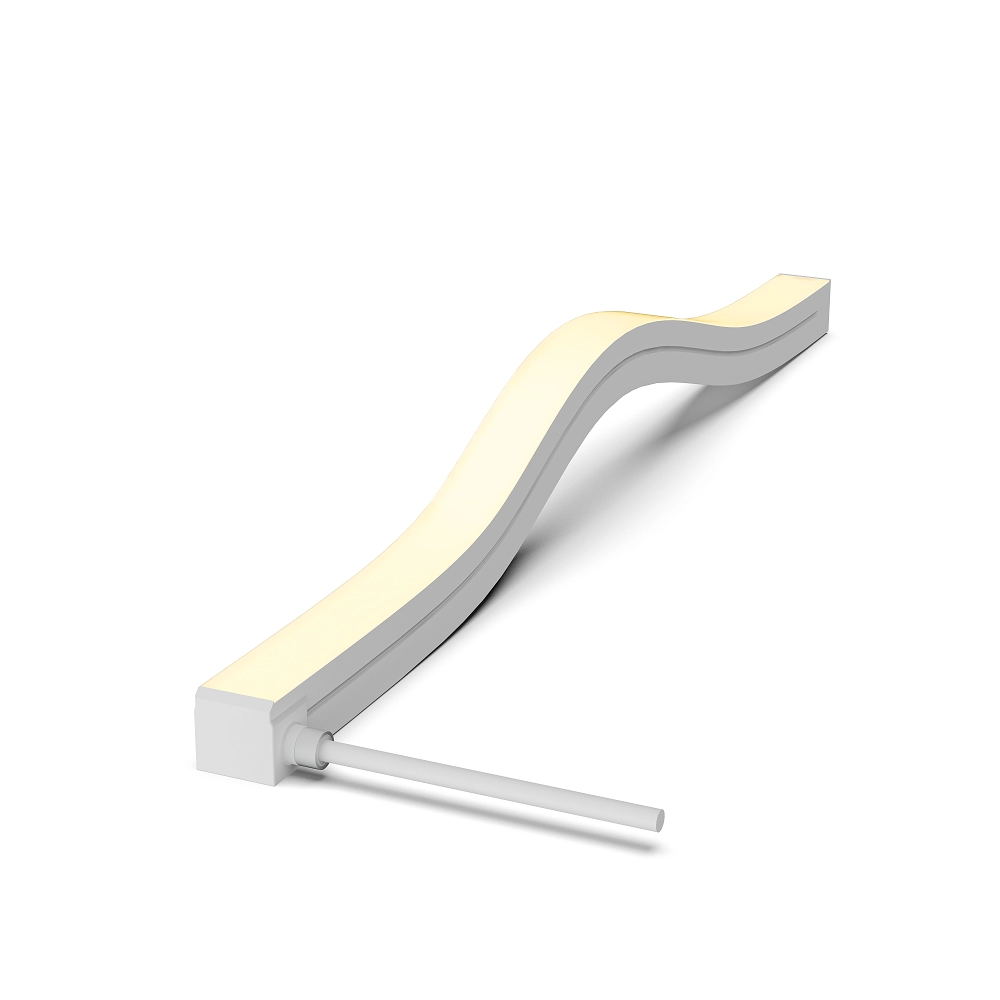
NOVANEON's NF Series Flexible LED Linear demonstrates this principle. A 10°C rise above optimal junction temperature can shorten product life by 30-50%; lowering it extends life by roughly the same margin. Dimming output by 25-30% also lowers junction temperature, slowing lumen depreciation and improving reliability. The slim aluminum profile dissipates heat effectively, protecting long-term operation.
· Keep the LED chip cool. A 10°C rise can cut lifespan by up to half. A cooler chip slows damage.
· Size the aluminum profile to match your wattage. Apply thermal paste or pads. These materials fill air gaps. They move heat away.
· Space LEDs evenly across the circuit board. Allow airflow around the profile. These actions prevent hotspots. They keep temperatures stable.
· Choose high-efficiency LEDs. Use thick copper circuit boards. These parts produce less heat. They spread heat well. Quality parts extend LED life.
· Test your thermal design before large-scale installation. Measure chip temperature. Use thermal imaging. A custom LED flex manufacturer can validate your design.
An LED converts electricity into light, but this process is not perfect. Commercial LEDs typically convert only 20–30% of electrical energy into light. The remaining 70% becomes heat. This fundamental loss makes heat generation unavoidable in every LED chip.
Several mechanisms drive this heating. Phosphor conversion losses occur when blue LED light excites yellow phosphor, and Stokes losses reduce efficacy by 15–30% compared with the blue pump alone. Auger recombination transfers energy from electron-hole recombination to a third carrier instead of emitting a photon, and this process increases with temperature and carrier density. Series resistance and current crowding near electrical contacts create localized resistive heating. These sources combine to raise the internal temperature of the LED chip during operation.
Junction temperature is the temperature at the light-emitting region inside the LED chip. This metric matters most for lifespan because it directly governs degradation rates. A 10°C increase in junction temperature can reduce LED lifetime by up to 50%. In a 10,000-hour test by the Lighting Research Center, two identical LEDs ran at the same current, but one had a junction temperature 11°C higher. The hotter LED had its functional life reduced by more than 50%.
Heat must travel from the chip to the surrounding air through a defined path: LED chip → solder pad → PCB → thermal interface material → aluminum profile→ ambient air. Each step adds thermal resistance. Higher ambient temperature or thermal resistance raises junction temperature. Poor thermal management in LED PCBs causes junction temperatures to exceed safe limits, accelerating lumen depreciation, color shifting, and premature failures. For white SMD LEDs, the recommended target is Tj < 90°C. Warm-white SMD LEDs (2700–3500K) should stay below 85°C. At 100°C, phosphor degradation doubles. Above 110°C, visible color shift can occur within 2,000–5,000 hours. These limits define the impact of heat on LED longevity.
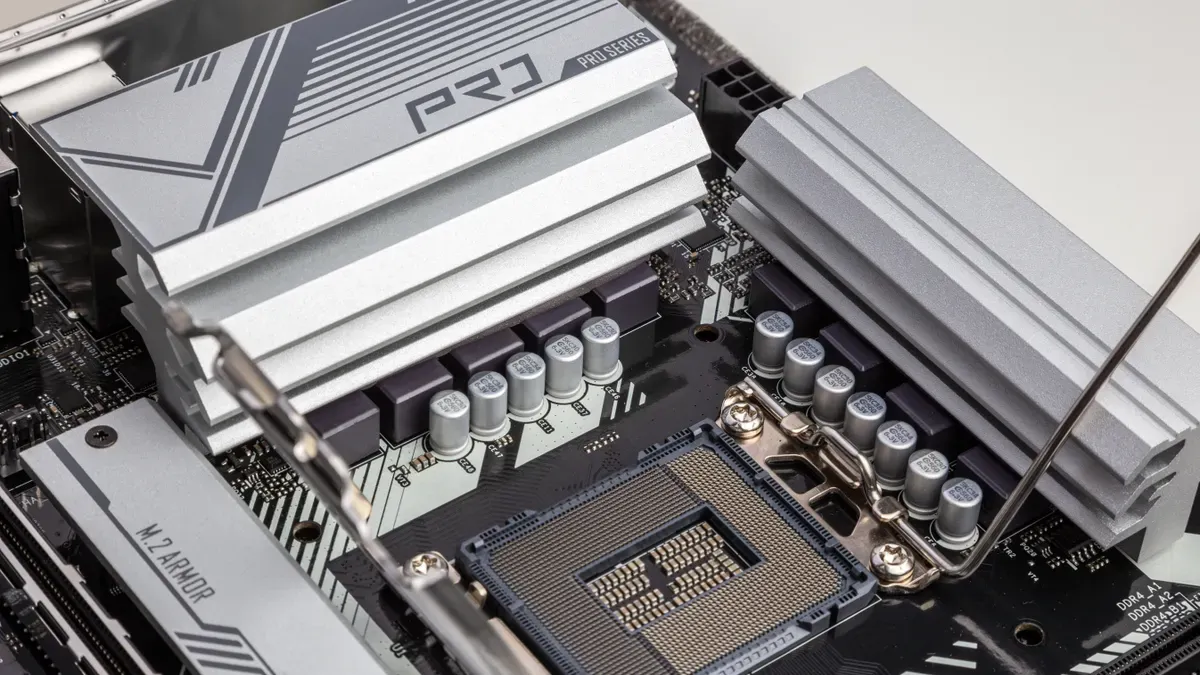
Aluminum channels dissipate heat from LED strip lights and extend lifespan. The metal conducts thermal energy away from the LED chip and spreads it across a larger surface area. This process lowers the operating temperature at the junction and slows degradation.
Material choice affects performance. The table below shows thermal conductivity values for common aluminum alloys.
Alloy / temper | Thermal conductivity (W/m·K) | Primary use case |
6063-T5 | ~201 | Standard commercial cooling, LED housings |
6061-T6 | ~167 | Structural chassis, heavy machinery |
6060-T5 | ~209 | Micro-channels, extreme fin density |
Extruded 6063 aluminum offers a conductivity of 200–210 W/m·K. This value makes it the standard choice for LED profiles. Aluminum construction in silicone profiles helps dissipate heat generated by the LEDs, improving led strip performance and longevity. Thermal management is critical for linear LED performance, not just optics.
Microscopic air gaps exist between the PCB and the aluminum profile. Air traps heat and raises thermal resistance. Thermal paste and thermal pads fill these gaps to improve heat transfer.
Each material suits different situations. Thermal pads handle uneven surfaces and larger gaps above 0.5 mm. Thermal paste wets surfaces and fills microscopic voids more completely. A paste achieves a thinner bond line around 7–20 micrometres, which lowers thermal resistance. Pads typically conduct 1–6 W/mK, while paste reaches 4–12 W/mK or higher.
NOVANEON's NF Series slim aluminum profiles (NF1418S, NF1418TS, NF2020S, NF2020TS) demonstrate efficient heat dissipation in a low-profile indoor design. These models support gentle curves and 3D bending. The slim aluminum body manages heat while maintaining a clean appearance. Proper aluminum led pcb thermal engineering ensures stable brightness and longer lifespan. The ambient temperature around the installation also affects how well the system performs. Designers should account for this factor during specification.
Size plays a direct role in led strip light thermal management. Larger strips with more LEDs generate more heat that must be dissipated. A custom led flex manufacturer evaluates led density together with heat generation, copper distribution, airflow, and the surrounding mechanical structure to prevent heat buildup. Flexible assemblies often lack space for conventional heat sinks, so the design must provide an effective heat path away from the LEDs through the pcb and mounting structure.
Choosing the right profile size for the wattage and led density is essential. Reducing the distance between LEDs on a pcb increases thermal power density, which raises the operating temperature. Led manufacturers typically specify a recommended spacing and quantify the temperature rise expected when that spacing is reduced. Flexible led strip lights that use many low-power SMD LEDs distributed along their length produce a uniform glow and avoid hotspot formation because the thermal load is spread out. In contrast, high-power modules such as COBs concentrate heat and are used where intense light is required.
Airflow matters just as much as spacing. Designers should allow air to move around the profile and avoid enclosed, insulated installations. Concentrating heat-generating components in poorly ventilated areas traps heat and raises thermal resistance. Thermal testing under realistic operating conditions identifies hotspots before volume production begins. A combined system approach considers led density, power distribution, copper layout, ventilation, heat-spreading structures, and mechanical installation together.
Component selection determines how well a system manages heat. High-efficiency LEDs convert more electricity into light and less into heat. A thick copper pcb spreads thermal energy more effectively than a thin one. Quality thermal interface materials fill microscopic air gaps and lower thermal resistance between the pcb and the aluminum profile.
Assembly practices also affect thermal management and installation outcomes. NOVANEON's NF Series supports gentle curves and 3D bending, ultra-long continuous runs, and plug-and-play connectors. These features reduce connection points and heat buildup. Fewer connections mean fewer failure points and less localized heating. Professional waterproofing and thermal management improve reliability, appearance, maintenance efficiency, and long-term operating performance of led strip lights.
The benefits of proper thermal management extend beyond basic function. Optimized heat dissipation paths reduce led junction temperature by 10–20°C, improving stability and reliability. Light decay stays below 5% in the first 10,000 hours. Efficient heat dissipation extends lifespan to over 50,000 hours. Lower junction temperature increases luminous efficiency by 10–15% while maintaining consistent brightness. These outcomes depend on temperature control at every stage, from component selection to final installation. Designers who apply these thermal management tips for led strip lights protect their investment and ensure predictable performance. A custom led flex manufacturer can validate these choices before large-scale deployment.
Several recurring errors undermine thermal management in led pcb designs. The most damaging mistakes include:
1. Poor heat dissipation from limited airflow or confined spaces.
2. Wrong voltage supply, such as using 12V on a 24V strip.
3. Too much load on one driver, which overloads the system.
4. Voltage or current spikes from unstable power supplies.
5. Low-quality components with inferior thermal performance.
Undersized profiles rank among the worst offenders. A profile too small for the wattage cannot spread heat effectively. Installations without thermal interface material leave air gaps that raise thermal resistance. Overcrowded LEDs concentrate heat and create hotspots. Enclosed installations trap heat and prevent overheating through natural convection. Mixing incompatible components from different suppliers disrupts the thermal path.
Poor thermal management in led pcbs stands as a leading cause of premature failure and color shift. Evidence shows that every 10°C rise in junction temperature above optimal levels can decrease lifespan by 30-50%. A fixture rated for 50,000+ hours on paper may deliver far less when airflow is restricted. In enclosed spaces with little airflow, lifetime can drop to 15,000 hours or less. These outcomes affect led strip lights in coves, ceilings, and millwork where ventilation is limited.
Validation confirms that a design meets its thermal targets before large-scale installation. A recommended sequence begins with junction temperature measurement using the forward voltage method with a 1 mA test current. Thermal imaging then inspects the pcb and components for hotspots. Engineers validate thermal margins against target limits for the intended product class. Accelerated life testing for 1,000 hours at high temperature confirms whether a 50,000+ hour lifetime is achievable.
Acceptance criteria vary by application. The table below shows target limits.
Application class | Target lifetime | Maximum junction temperature | Thermal design expectation |
Consumer | ~20,000 h | ≤85°C | Basic PCB design |
Commercial / industrial (linear lighting) | 50,000+ h | ≤80°C | Enhanced thermal layout |
Long-life industrial | 100,000+ h | ≤70°C | Maximum copper and thermal vias |
Lumen maintenance testing tracks light output over time to establish the l70 lifespan, the point at which output falls to 70% of initial value. Long-run burn-in tests reveal defects that short tests miss. These practices give designers confidence in led junction temperatures under real conditions.
A custom led flex manufacturer can validate thermal performance before large-scale deployment. This step protects reliability and ensures predictable results. Designers should seek a partner with led pcb manufacturing service capabilities and proven temperature control methods. Proper validation reduces thermal resistance at every interface and supports long-term performance.
Thermal management directly determines LED lifespan. Lower junction temperature slows degradation.
Four actions matter most. Size the aluminum profile to the wattage. Apply thermal interface material between the PCB and profile to cut thermal resistance. Space emitters across the PCB and let air move around the PCB. Choose quality PCB components for every PCB assembly.
NOVANEON's NF Series proves this approach. Its slim aluminum profile and PCB layout manage PCB heat in low-profile designs. The PCB supports gentle curves and long runs. Fewer PCB joints mean lower thermal resistance and better reliability.
Consult a custom led flex manufacturer for tailored solutions. Sound PCB design protects reliability and keeps operating conditions stable.
Junction temperature governs degradation rates inside the LED chip. A 10°C rise above optimal levels can cut functional life by more than half. Keeping the junction cool through proper thermal paths protects brightness and color stability over thousands of operating hours.
Microscopic air gaps between the pcb and aluminum profile trap heat and raise thermal resistance. Thermal paste or pads fill these voids and create a continuous heat path. This bridge lowers thermal resistance and lets the aluminum profile spread heat away from the pcb more effectively.
The pcb carries heat from the LED chip to the aluminum profile. A thick copper pcb spreads thermal energy better than a thin one. Designers should distribute LEDs evenly across the pcb to avoid hotspots and maintain consistent pcb temperatures during operation.
Installers should allow airflow around the profile and avoid enclosed spaces. Choosing the right profile size for the wattage prevents overheating. Quality components on the pcb and proper assembly practices reduce pcb thermal resistance and support long-term pcb reliability.
Testing confirms that a pcb design meets thermal targets. Junction temperature measurement, thermal imaging, and burn-in tests reveal pcb hotspots before deployment. A custom LED flex manufacturer can validate pcb performance and ensure pcb reliability across real operating conditions.
Please provide the following detailed information so that our business representatives can better understand your needs and get in touch with you as soon as possible.