
 EN
EN
 English
 繁体中文
繁体中文 Italian
 Greek
Greek Spanish
 Hebrew
 Japanese
 Portuguese
 Korean
 Russian
 French
 German
 Arabic
Blog & Events
Follow NOVANEON for more valuable information to know early
Follow NOVANEON for more valuable information to know early
Aug 11Source: Views: 186
Suspended pendant fixtures create floating focal points in high spaces. Flush structural installations deliver invisible illumination across ceilings. This visual contrast defines every modern architectural lighting project. Selecting an optical led linear suit transforms raw LED fixtures into refined luminaires. Advanced lenses, darklight reflectors, and anti-glare louvers shape precise light beam angles. These modules elevate basic led linear lighting into an effortless architectural statement.
Designers analyze specific spatial conditions for optimal layout design. Ceiling height, room function, and visual anchor points dictate spatial flow. Low ceilings favor recessed linear lighting for seamless integration. Higher volumes suit suspended profiles with dual light direction. Strategic linear setups enhance ambient lighting while elevating indoor lighting design.
Suspended fixtures distribute light downward and upward simultaneously. Direct linear light distribution directs over 90 percent of output downward, yielding high luminous efficacy between 100 and 140 lumens per watt. Indirect linear lighting directs illumination upward against structural ceilings, providing reflected light with an efficacy between 70 and 100 lumens per watt. Recessed installations deliver continuous linear light across whole rooms without visual interruptions.
Advanced optical modules maximize visual comfort across all architectural lighting applications. Anti-glare louvers and darklight reflectors restrict unwanted spill light. These optical components maintain a Unified Glare Rating below 19, which prevents eye strain in commercial spaces like modern offices or school classrooms. Stricter applications like computer suites require a rating below 16 for optimal comfort.
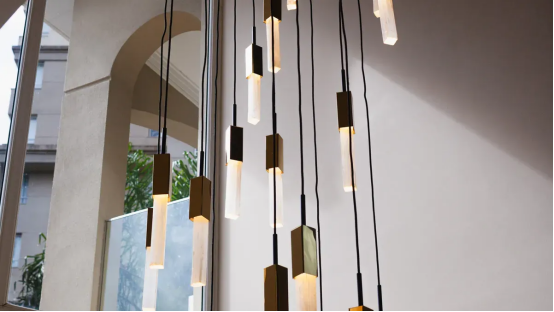
Pendant linear lighting creates dramatic visual focal points in high spaces. Slender pendant fixtures draw the gaze upward, making low ceilings feel loftier and more expansive. Recessed linear lighting preserves total vertical space while integrating flush into ceilings.
Performance Metric | Pendant LED Linear Fixtures | Recessed LED Linear Fixtures |
Visual Appearance | Visible body, functional aesthetic | Clean, seamless ceiling integration |
Efficiency Gain | Standard energy delivery | 44% improvement over fluorescent |
Operating Cost | Standard maintenance costs | 60% lower expenses within 3 years |
Lifespan Rating | Standard commercial lifespan | 50,000 hours for minimal disruption |
Selecting an optical led linear suit requires balancing structural design with daily functionality. Pendant fixtures cost less initially and allow quick retrofit access in residential settings. Recessed linear light fixture systems protect led components inside ceiling cavities for commercial spaces. High-end residential projects often pair both led linear lighting options to balance design elements. Strategic deployment of each led linear light fixture optimizes long-term energy savings across large facilities. Every led linear light enhances indoor architectural balance while meeting key lighting needs.
Dual optical delivery systems balance direct light downward with indirect light upward. An optical led linear suit distributes uniform illumination across working environments. This direct and indirect dual approach stabilizes visual adaptation. It also reduces contrast ratios in large public spaces. Proper setup enhances total lighting performance.
Photometric Parameter | Value |
Direct Beam Angle | 110° flood |
Indirect Beam Angle | 120° |
Lumen Output | 1950 Lm/Ft @3000K |
Efficacy | Up to 130 Lm/W |
These direct and indirect optical modules optimize visual comfort in every room. Micro-prismatic diffusers redirect rays to lower glare levels below UGR 19. Frosted diffusers eliminate hot spots while acrylic materials maintain up to 95% light transmission rates. Precise beam shaping increases linear lighting efficiency. Modern linear lighting fixtures optimize energy distribution. Superior led linear lighting improves room aesthetics.
Suspended led linear pendant lights create floating visual anchors in high spaces. Aircraft-grade steel cables allow precise height adjustments for led linear light distribution. Designers specify led linear pendant lights across diverse commercial and residential applications:
· Offices & Meeting Rooms
· Restaurants & Bars
· Retail Stores
· Educational Spaces
· Hotels & Hospitality
· Residential Projects
Dropping a linear light fixture closer to working surfaces improves visual appeal. The following table highlights core design advantages for elevated spatial layouts:
Design Benefit | Description |
Higher brightness | Dropping the track closer eliminates wasted light. |
Better contrast and depth | Great for retail and galleries. |
Modern architectural appearance | Suits industrial and contemporary interiors. |
Threaded grippers clamp cables to enhance operational functionality. Pre-terminated cable kits streamline standard drops for commercial facilities and residential homes. Strategic led linear light placement provides balanced linear lighting across open areas. This led linear light arrangement offers flexible linear lighting control. A well-placed led linear light elevates modern architectural spaces. Designers use these versatile fixtures to enhance architectural design. Each led linear light transforms high ceilings into balanced visual statements. Suspended pendant profiles bring timeless charm to modern led linear lighting setups. This system delivers refined architectural lighting.
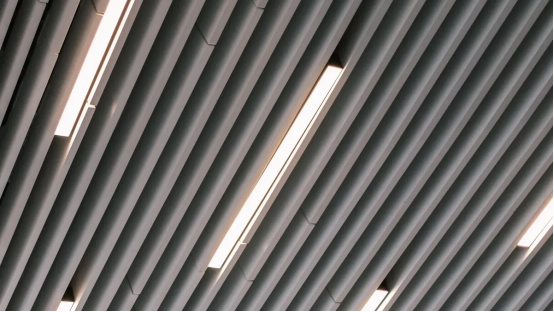
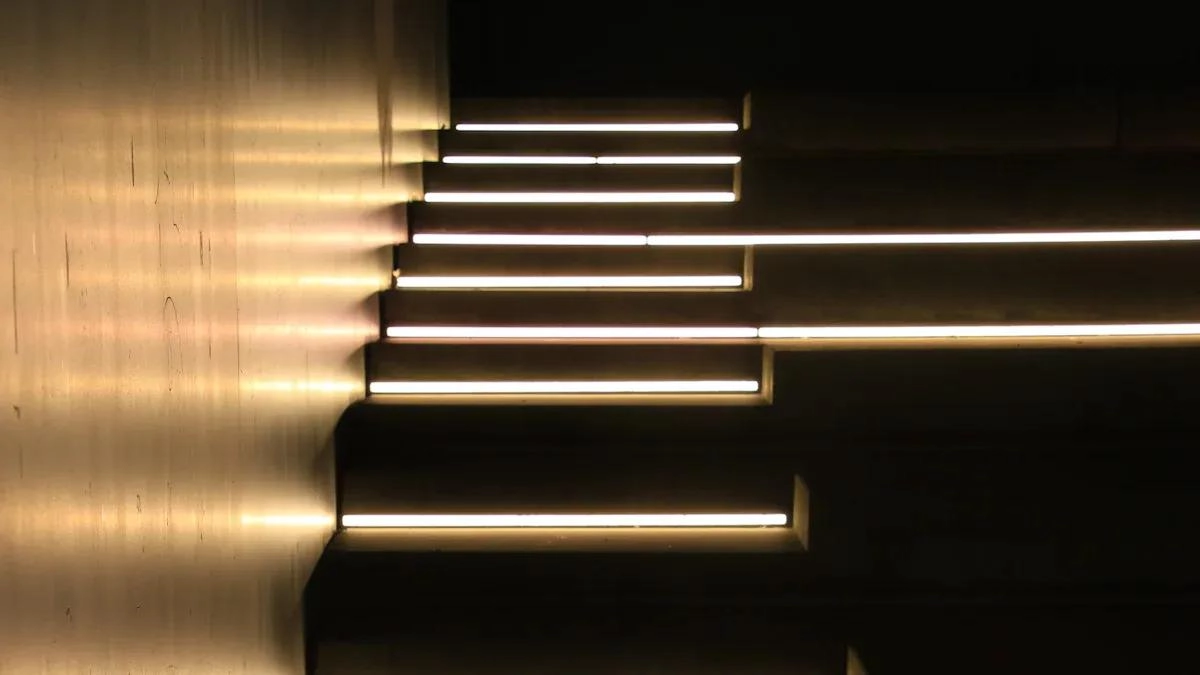
Recessed linear lighting embeds structural fixtures flush inside ceiling planes to establish sleek visual harmony. Installers sink recessed led linear lights into plaster, drywall, or ceiling grid systems. This architectural method hides the light source body while highlighting pure optical output. High-end modern projects incorporate recessed linear lighting to enhance spatial efficiency without cluttering open ceiling areas.
Advantage | Direct Support for Minimalist Ceiling Designs |
Embedded structure saves space | Fixtures sit fully hidden in ceiling slots to preserve clean architectural lines. |
Strong adaptability | Flush channels match hard interior structures to deliver uniform linear light. |
Easy to clean and maintain | Smooth surfaces remove protruding edges and eliminate dust collection points. |
Efficient and energy-saving | Long-lasting LED sources lower replacement cycles across active facilities. |
Architectural installer teams rely on exact trimless construction to achieve perfectly flush continuous channels across modern ceilings. The ZETA 2.3" linear light fixture provides trimless mud-in options for drywall applications. Installers fasten the perforated aluminum flange to ceiling joists with standard drywall screws. Workers apply drywall compound across the flange at a plaster depth between 1/16 and 1/8 inch to prevent structural cracking. Sanding and painting create a smooth surface without visible shadows.
· Ultra-slim aperture with 0.91" height reduces visual clutter for flush ceiling integration.
· Precise construction allows seamless fixture alignment without compromising total lumen output.
· Non-yellowing PMMA diffusers maintain crisp visual light transmission over a 50,000+ hour lifespan.
Commercial properties use recessed linear lights inside corporate offices, hotels, and luxury retail venues. Residential layouts integrate these recessed fixtures across modern kitchens and long corridors.
Advanced optical engineering delivers precise glare control inside low-profile housings. An optical led linear suit pairs Total Internal Reflection lenses with deeply recessed micro-reflectors. These specialized darklight components control direct beam projection. The internal optics shield high-intensity rays, preventing uncomfortable light spill into human eye level.
· Deep-cut darklight louver optics minimize direct visual glare and raise visual comfort across working environments.
Architects preserve functional architectural design by specifying linear lighting with darklight optics. This modern led linear lighting technology enhances daily room functionality while maintaining elegant ceiling surfaces.
Architectural plans dictate fixture selection through ceiling height and spatial clearance. Designers specify recessed profiles for low ceiling heights to maintain headroom, whereas high ceilings accommodate suspended fixtures. For standard ceiling heights, a distance of 7 to 8 feet from the floor is generally recommended. Open circulation spaces maintain clear pathways when installers hang every light unit 7.5 to 8 feet above the floor. In contrast, residential dining areas benefit when builders position every led linear light 30 to 36 inches above dining tables.
Narrow Beam (10°–24°) – Strong Accent Lighting Best for: Retail feature products, art galleries, hospitality focal points, premium showcases. What it does well: Creates strong contrast and a clear visual focal point; increases perceived value. Main risk: Glare and harsh hotspots if optics or aiming are wrong; requires strong glare control.
Room purpose further refines every linear lighting strategy. Task areas require task fixtures placed 8 to 10 feet above work surfaces to ensure energy-efficient lighting across active work spaces. Accent lighting setups position linear strips 12 to 18 inches from walls to illuminate vertical surfaces. Ambient applications in open offices utilize energy-saving linear layout spacing, where installers separate parallel rows by 1.5 times the total mounting height. Selecting a tailored optical led linear suit balances energy savings with functional needs across modern residential lighting and commercial lighting projects.
Successful led linear lighting projects require careful structural framing and precise mounting selection. Drywall installations for recessed profiles require sturdy ceiling joists to support trimless channels. Recessed setups conceal total fixture bulk inside structural cavities. Suspended led linear light models rely on ceiling anchors holding aircraft cables or rigid drop rods to secure suspended fixtures safely.
1. Conduct Technical Assessment: Inspect power supply, wiring paths, and control signal routing. Confirm fixture compatibility with control systems.
2. Perform On-Site Validation & Simulation: Use handheld fixtures or sample lights for preliminary tests to observe variations in angle, color temperature, and brightness.
3. Optimize Beam Angles for Irregular Surfaces: For curved or irregular facades, avoid single long-throw fixtures. Instead, divide the facade into segments and use short-throw, narrow-angle fixtures for gradual light transitions.
4. Control Glare: Use louvers, baffles, and proper fixture recessing. Begin installations at low luminance levels and gradually increase, assessing glare from multiple key viewpoints.
Evaluation Category | Key Considerations for Designers |
Architectural Site Conditions | Facade height, wall distance, mounting position, installation angle, indoor/outdoor exposure. |
LED & Module Information | LED package/quantity, PCB layout, available optical space, thermal structure. |
Beam & Visual Effect Target | Required beam angle, wall-wash uniformity, glare control, cut-off target, IES file reference. |
Architectural Project Needs | Project stage, customization requirements, sample schedule, OEM/ODM cooperation. |
Recommended Optical Routes | 1. Standard Lens Selection, 2. Lens & Fixture Matching, 3. Customized Optical Development. |
Optical density directly affects visual efficiency across long fixture runs. Tight LED spacing prevents visible dark spots, while high-density COB led modules eliminate hot spots. Installers align every linear light fixture along structural layout lines to ensure uniform architectural lighting performance. Proper linear lighting alignment preserves long-term efficiency across residential design schemes. This technical discipline delivers maximum functionality and continuous visual light output throughout every commercial setting. High-performance architectural design maximizes overall efficiency.
Choosing between pendant and recessed setups depends on architectural lighting goals. Pendant suites bring layered light and visual anchor points into high-ceiling spaces. Recessed suites provide clean overhead lines for modern minimalist linear lighting layouts.
Designers balance function and room aesthetics when specifying each LED linear setup. Proper linear placement enhances spatial proportions and optimizes energy distribution. Selecting a precise optical LED linear suit elevates linear lighting performance across every project design.
For designers aiming to align optical beam angles with spatial goals, the recommended approach is to employ the undulator-DCM-CRL setup, which produces round, flat X-ray beam profiles using only standard components that are simple to align.
High ceilings accommodate a pendant layout best. Installers maintain a clearance distance between 7 and 8 feet above the floor. This mounting height optimizes direct light output and delivers balanced room light.
Advanced darklight optics and anti-glare louvers restrict spill light. These optical lenses keep the Unified Glare Rating below 19 inside working environments. Proper linear lighting maintains visual comfort. An optical led linear light prevents eye strain across active work spaces while delivering uniform linear lighting output.
Designers select a recessed profile for low ceiling heights to maximize headroom. Flush aluminum channels sink into ceiling cavities to eliminate visual clutter. This approach delivers smooth linear lighting across long corridors. A trimless led linear light protects internal led components while providing clean architectural light distribution.
Modern linear lighting setups utilize precise optics to direct light rays efficiently. Optical lens modules prevent wasted illumination while delivering high efficacy up to 130 lumens per watt. Selecting an efficient led linear light lowers energy consumption across commercial lighting facilities. Strategic linear lighting design improves long-term lighting performance.
Please provide the following detailed information so that our business representatives can better understand your needs and get in touch with you as soon as possible.