
 EN
EN
 English
 繁体中文
繁体中文 Italian
 Greek
Greek Spanish
 Hebrew
 Japanese
 Portuguese
 Korean
 Russian
 French
 German
 Arabic
Blog & Events
Follow NOVANEON for more valuable information to know early
Follow NOVANEON for more valuable information to know early
Sep 02Source: Views: 188
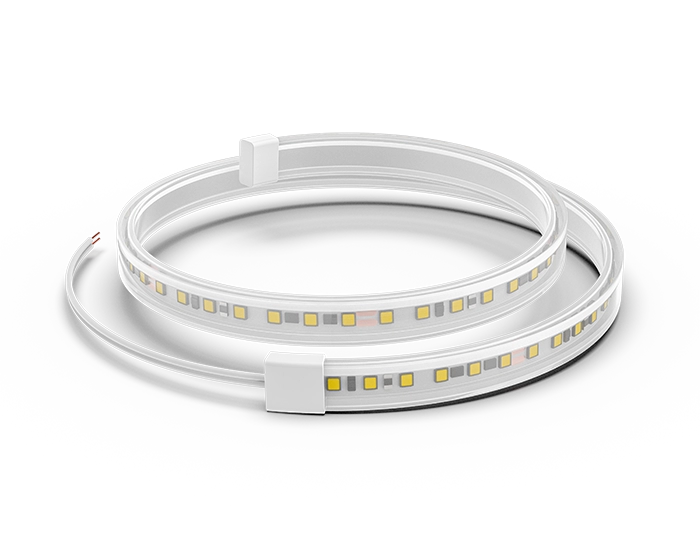
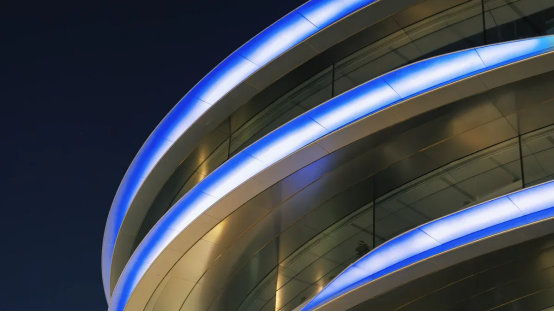
For curved facades, the flexible wallwasher stands as the superior choice. Its ability to bend and conform to non-linear surfaces ensures uniform light distribution and seamless alignment along sweeping architectural lines. Rigid light bars serve straight, linear structures well, where they provide precise directional washing without gaps or overlaps.
The comparison between Flexible Wallwasher vs Rigid Light Bar hinges on several critical factors: curvature adaptability, installation ease, illumination continuity, control options, and surface suitability. Each factor determines how effectively a fixture performs on a given project.
This post delivers a clear verdict and practical guidance for selecting the appropriate lighting solution on curved projects.
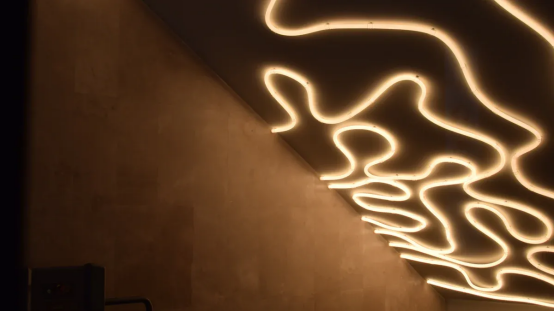
The verdict is clear: flexible wallwashers are the go-to choice for curved facades. Lighting professionals consistently rank them above rigid alternatives when the architecture bends, arcs, or sweeps. The core reason lies in their construction—these fixtures bend along multiple axes, conforming to the exact geometry of the surface they illuminate. Rigid light bars, by contrast, demand straight runs and flat planes to perform at their best.
Curved architecture presents a fundamental challenge: light must follow the surface, not fight against it. Flexible wallwashers solve this problem through their physical design. Top-bending models flex along the vertical axis, keeping the optical lens perpendicular to the bend. This orientation ensures the light beam washes across the curved surface without distortion, directly preserving illuminance uniformity on arches and curved wall tops.
The engineering behind this adaptability is sophisticated. Independent PCB sections connect serially inside flexible silicone housing, allowing lenses to remain aligned with their corresponding LED sections even as the housing follows compound curves. This 3D flexible structure retains a controlled wall-washing beam across complex geometry, preventing uneven light distribution that plagues rigid fixtures on curved surfaces.
The advantages lighting professionals cite for these fixtures include:
l 3D curved bendability for intricate architectural and artistic forms
l Flexible installation on curved architectural surfaces, enabled by 3D bending with top lighting design
l Design creativity and installation flexibility, specially designed for unconventional architectural spaces
Technical specifications support this versatility. A minimum bending radius of 200mm allows these fixtures to hug tight curves without stress or damage. Low voltage DC24V operation ensures safety and efficiency. Beam angle options range from 15° to 60°, with additional choices like 25°×45° and 30°×60° for specialized applications. Protection ratings of IP65–IP67 mean these fixtures withstand outdoor exposure, while optical grade silicone extrusion protects the internal components. Minimum cut length of 250mm gives installers precision when fitting exact facade dimensions.
The W Wall Washer System demonstrates how bending capability actively supports design continuity. Its unified structure uses identical cross-sections, enabling seamless transitions between curved and straight sections. Matched LEDs and optical components eliminate shadows and ensure consistent output. The bending capability does not compromise light distribution—it enhances it across fluid architectural forms.
Rigid light bars maintain their place in the lighting landscape, but their strengths align with different geometry. Straight, linear facades benefit from the precise directional washing these fixtures provide. On flat surfaces, rigid bars deliver consistent, predictable illumination without the need for complex mounting solutions.
For angular architecture—buildings with sharp corners, clean edges, and defined planes—rigid bars offer simplicity. They mount directly to flat surfaces, require no special bending considerations, and provide uniform light distribution across their entire length. Their construction also allows for higher power output in some configurations, making them suitable for large-scale straight facades where intense illumination is required.
The Flexible Wallwasher vs Rigid Light Bar decision ultimately comes down to geometry. When the facade curves, flexible wins. When the facade runs straight, rigid performs admirably. Understanding this fundamental distinction guides specifiers toward the right solution for each project.
Flexible wallwashers bend on-site to match the facade's exact radius. Installers shape the fixture along the surface like a tape measure, conforming to arcs, waves, and compound curves without special tools. A minimum bending radius of 200mm allows these fixtures to hug tight architectural details while maintaining optical alignment. The segmented PCB construction inside flexible silicone housing keeps each lens perpendicular to the surface, preserving beam accuracy even on challenging geometry.
Rigid light bars cannot bend at all. Their straight aluminum housings demand flat mounting planes. When a project requires curved illumination, specifiers must order pre-fabricated curved sections or custom brackets machined to match the facade's radius. This approach introduces significant complexity. Each curved section requires precise measurements, factory fabrication, and careful coordination between the lighting manufacturer and the installation team. Any on-site adjustment becomes nearly impossible once the factory produces the curved sections.
The surface fit difference becomes obvious during installation. Flexible wallwashers adapt to irregular facades naturally, following subtle variations in the building surface. Rigid bars expose every imperfection, requiring shims or adjustable mounts to compensate for surface irregularities. For delicate facades made of stone, glass, or historic materials, flexible fixtures avoid bulky mounting hardware that could damage the substrate.
Installation crews complete flexible wallwasher projects faster. The fixture arrives in straight lengths and bends on-site, eliminating the need for factory-fabricated curved sections. Crews mount the fixture directly to the surface using standard brackets, then shape it to follow the architecture. This workflow reduces lead time and simplifies logistics.
Rigid bar installation on curved facades demands a different approach. Crews must install custom brackets at precise angles, align pre-fabricated curved sections, and manage heavier components. Each section requires careful positioning to maintain consistent spacing and light distribution. The process multiplies installation hours and increases the risk of alignment errors.
The Flexible Wallwasher vs Rigid Light Bar comparison on installation favors flexibility. Flexible fixtures work better for delicate or irregular facades because they avoid bulky mounting systems. The lightweight, low-profile design distributes stress evenly along the curve, reducing point loads on fragile surfaces. Rigid bars concentrate weight at bracket points, potentially stressing the facade structure.
Flexible wallwashers deliver a seamless wash of light along the entire curve. The optical lenses remain perpendicular to the surface at every point, so the beam maintains consistent intensity from one end of the arc to the other. This uniformity matters because the human eye detects even slight variations in brightness along a continuous architectural line. A flexible fixture produces a smooth gradient that follows the facade's geometry without interruption.
Rigid light bars cannot achieve this effect on curved surfaces. Their straight housings force the beam to strike the surface at varying angles along the curve. The result is uneven illumination—brighter where the bar sits closer to the facade, dimmer where the distance increases. Lighting designers evaluate this quality using luminance measurements at critical viewing angles. The rule of thumb at 65° states that values below 1000 cd/m² remain comfortable, below 500 cd/m² become excellent, and below 200 cd/m² achieve true Darklight status. Flexible wallwashers maintain these thresholds consistently across the curve, while rigid bars drift in and out of acceptable ranges.
Dark spots represent the most visible failure of rigid bars on curved architecture. When a straight fixture spans a curved surface, gaps appear between the fixture and the facade at the midpoint of each segment. These gaps create shadowed zones that break the visual flow. Installers often attempt to compensate by adding more fixtures, but this approach introduces overlapping beams and new inconsistencies.
Flexible wallwashers eliminate this problem through continuous contact with the surface. The fixture hugs the curve completely, leaving no space for shadows to form. Industry standards for daylight performance offer a useful parallel. The Useful Daylight Illuminance metric targets 300–3000 lux for at least 50% of occupied hours on 50% of floor area. Spatial Daylight Autonomy requires 300 lux for half the operating year across 55% of the space. These thresholds demonstrate how lighting professionals quantify continuity—and flexible fixtures meet these standards on curved surfaces where rigid alternatives cannot.
The Flexible Wallwasher vs Rigid Light Bar comparison on illumination continuity favors the flexible option decisively. Rigid bars suit straight facades where their uniform beam works without interruption. Curved architecture demands fixtures that follow the surface, and only flexible wallwashers deliver that performance.
Control capability separates these fixtures beyond their physical construction. Flexible wallwashers typically support DMX512 protocols, enabling sophisticated lighting scenes that transform facades into dynamic displays. Rigid light bars offer simpler control schemes, usually limited to on/off switching or basic dimming. This distinction matters for architects who envision their projects as living, changing installations rather than static illumination.
DMX512 gives lighting designers precise command over every fixture. Each wallwasher responds to individual addressing, allowing groups of fixtures to change colors, shift intensities, and run coordinated sequences. A curved facade becomes a canvas for animated light shows, holiday themes, or brand-specific color palettes. The system supports smooth color transitions that create a premium appearance, with gradual fades replacing abrupt switches.
Basic controls on rigid bars serve a different purpose. They provide reliable, predictable illumination without complexity. Building operators flip a switch or adjust a dimmer, and the lights respond accordingly. This simplicity suits projects where consistency matters more than spectacle. However, basic controls carry inherent limitations:
l No synchronized effects – Multiple fixtures cannot coordinate color changes or run scenes together.
l No flexible scene programming – Operators cannot reprogram the system for daily operations, events, or holidays.
l No zoned control – The entire facade operates as a single unit, preventing localized dynamic effects.
l No smooth color transitions – Gradual, fluid color changes remain impossible with simple switching.
The mistake is applying RGBW to circulation paths, parking edges, or healthcare entries where consistency matters more than novelty. Keep dynamic effects away from critical wayfinding and safety zones. On those routes, predictable white light always wins.
DMX-enabled flexible wallwashers integrate seamlessly with building management systems. Operators control the entire facade from a central dashboard, scheduling scenes based on time of day, occupancy, or special events. The system accepts triggers from external sensors, allowing the lighting to respond to environmental conditions or programmed calendars.
Rigid bars with basic controls offer limited integration. They connect to standard lighting circuits, which building management systems can switch on or off. This arrangement works for straightforward applications but cannot deliver the nuanced control that modern architectural projects demand. The Flexible Wallwasher vs Rigid Light Bar comparison on control favors the flexible option for dynamic projects, while rigid bars remain adequate for static installations where simplicity takes priority.
Flexible wallwashers excel on 3D curved surfaces, arcs, and irregular paths. Their segmented construction allows them to follow compound curves that change direction in multiple planes simultaneously. This adaptability makes them the most versatile option for contemporary architecture that pushes beyond simple geometry.
Different facade materials respond uniquely to adaptive lighting. Highly reflective glass surfaces benefit from shallow-recessed flexible linear lighting combined with wide-beam wall washers. Designers add louvers or reduce intensity to control bright points, maintaining architectural contours and low glare while preserving depth and clarity at night. Parametric metal skins require pixel-level illumination with modular strips. Low-frequency LED drivers and fade-in/fade-out transitions enable dynamic, visually comfortable effects without overwhelming observers or causing flicker.
Perforated or textured surfaces present another opportunity. A combined point-light and backlight strategy works best here. Low-angle wall washing fills in texture while point lights emphasize details, enhancing light and shadow interplay to create a layered and visually engaging nightscape. Stone and brick facades demand warm white light at 2700–3000 K with CRI above 80, preserving tactile warmth and natural material appearance. Glass and metal surfaces respond better to neutral to cool tones at 3500–4000 K with CRI above 80, amplifying modern clarity and precision.
Rigid light bars remain the preferred choice for straight, linear facades. Their fixed housings deliver precise directional washing across flat planes without the complexity of bending mechanisms. On angular architecture with sharp corners and defined edges, rigid bars mount directly and provide uniform illumination across their entire length.
The Flexible Wallwasher vs Rigid Light Bar decision becomes straightforward when geometry dictates the answer. Straight surfaces allow rigid bars to perform at peak efficiency, producing consistent beam angles and predictable light distribution. Their simpler construction also supports higher power configurations for large-scale flat facades requiring intense illumination.
For mixed projects combining straight and curved sections, specifiers often choose a hybrid approach. Flexible wallwashers handle the sweeping arcs while rigid bars cover the linear runs. This combination leverages each fixture's strengths without compromising the overall design vision.
Stadiums, museums, and cultural centers with sweeping curves demonstrate the clear advantage of flexible wallwashers. The Heydar Aliyev Center in Baku presents a prime example. Its flowing white facade rises and falls in continuous waves. Rigid fixtures cannot follow such geometry. Flexible wallwashers bend along the structure's contours, delivering uniform illumination across every fold and crease. The result creates a dramatic nighttime presence that enhances the building's architectural statement.
Contemporary art museums frequently feature curved gallery walls and undulating exterior surfaces. These spaces demand lighting that adapts without compromising visual comfort. Flexible wallwashers mount flush against the curved surface, maintaining consistent beam angles. Visitors experience the architecture as a continuous form rather than a series of disconnected illuminated segments. The optical grade silicone housing protects LEDs while allowing the fixture to follow tight radii down to 200mm.
Sports venues present another compelling application. Modern stadium exteriors often incorporate sweeping rooflines and curved facades. Flexible wallwashers with DMX512 control enable dynamic color sequences that celebrate team victories or special events. The fixtures bend around structural columns and follow the stadium's elliptical shape. This capability transforms the venue into a landmark destination after dark.
Mixed-use developments combine retail, residential, and office spaces within a single complex. These projects frequently blend straight sections with curved architectural elements. A hybrid approach delivers the best outcome. Flexible wallwashers handle the sweeping arcs and rounded corners. Rigid light bars cover the linear runs along flat facade sections. This combination leverages each fixture's strengths without compromising the overall design vision.
The Flexible Wallwasher vs Rigid Light Bar decision becomes practical when project teams evaluate each facade segment individually. A curved entrance canopy benefits from flexible fixtures that follow its radius. Adjacent straight walls use rigid bars for precise directional washing. This strategy reduces costs while maintaining visual continuity. The unified cross-section design of modern flexible systems allows seamless transitions between curved and straight sections, ensuring consistent light output across the entire installation.
Project teams should map the building's geometry before specifying fixtures. They identify every curved section and measure its radius. They mark straight runs that accept rigid bars. This assessment guides fixture selection and prevents costly on-site adjustments. The result delivers a cohesive lighting scheme that respects both the architecture and the budget.
The following table distills the key differences between the two fixture types. It provides a side-by-side reference for specifiers evaluating the Flexible Wallwasher vs Rigid Light Bar decision on real projects. Each row addresses one critical factor that influences fixture selection.
Feature | Flexible Wallwasher | Rigid Light Bar |
Curvature Fit | Bends to any radius down to 200mm, hugs the surface like a tape measure | Requires custom brackets or pre-fabricated curved sections, limited to straight lines |
Installation Ease | Bends on-site, mounts with standard brackets, reduces lead time | Demands precise measurements, factory fabrication, and complex alignment |
Light Continuity | Delivers seamless wash along the entire curve with no gaps or dark spots | Creates dark spots on curves, requires multiple fixtures to compensate |
Control Options | Supports DMX512 for dynamic color changes, zoning, and scene programming | Offers basic on/off switching or simple dimming, limited integration |
Best Use Case | Curved facades, arcs, compound curves, irregular architectural surfaces | Straight, linear facades, angular buildings, flat planes |
The table reveals a clear pattern. Flexible wallwashers dominate every category that matters for curved architecture. They adapt to the geometry, install faster, maintain uniform illumination, and offer advanced control capabilities. Rigid bars excel only on straight surfaces where their fixed construction works without compromise.
Specifiers should use this table as a decision-making tool. They can evaluate each row against their project requirements. A stadium with sweeping rooflines needs the curvature fit and light continuity that flexible fixtures provide. A corporate headquarters with clean, flat walls can rely on rigid bars for efficient, predictable illumination.
The comparison also highlights cost implications. Flexible fixtures reduce installation labor and eliminate the need for custom fabrication. Rigid bars on curved surfaces multiply costs through specialized brackets and extended installation time. These factors affect the total project budget beyond the initial fixture price.
Lighting designers recommend reviewing this table alongside the building's architectural drawings. They identify curved sections that demand flexible solutions. They mark straight runs where rigid bars deliver adequate performance. This systematic approach ensures each fixture type serves its optimal purpose.
The final decision rests on geometry. Curved facades require flexible wallwashers. Straight facades accept rigid bars. The table provides the framework for making that determination with confidence.
The recommendation remains clear. For curved facades, lighting professionals choose flexible wallwashers. For straight lines, rigid light bars perform effectively. Flexible fixtures offer four key advantages. The fixtures bend seamlessly to match the curvature radius. They deliver uniform light distribution across the entire arc. Advanced DMX control supports dynamic effects. Installation proceeds more easily on irregular surfaces without complex brackets.
Project teams must evaluate their specific geometry first. They measure the curvature radius of every facade section. They determine the desired lighting effect—static or dynamic. They assess control requirements early in the design phase. This evaluation guides the final fixture selection.
The Flexible Wallwasher vs Rigid Light Bar decision hinges on geometry. Assess the curvature radius and dynamic needs of the facade to pick the right solution.
Yes. Flexible wallwashers achieve a minimum bending radius of 200mm. This allows them to hug tight architectural details while maintaining optical alignment and uniform light distribution.
Yes. Flexible wallwashers typically support DMX512 protocols. This enables dynamic color changes, zoned control, and scene programming for sophisticated architectural lighting designs.
Yes. Mixed-use projects with straight and curved sections benefit from a hybrid approach. Flexible fixtures handle sweeping arcs. Rigid bars cover linear runs. This strategy optimizes performance and cost.
Yes. Flexible wallwashers carry IP65 to IP67 protection ratings. Optical grade silicone extrusion protects internal components. They withstand outdoor exposure on building facades.
Please provide the following detailed information so that our business representatives can better understand your needs and get in touch with you as soon as possible.