
 EN
EN
 English
 繁体中文
繁体中文 Italian
 Greek
Greek Spanish
 Hebrew
 Japanese
 Portuguese
 Korean
 Russian
 French
 German
 Arabic
Blog & Events
Follow NOVANEON for more valuable information to know early
Follow NOVANEON for more valuable information to know early
Oct 13Source: Views: 2
Flexible facade wall washing favors even illumination and adaptability, making this technique the safer recommendation. Wall grazing wins when texture matters, especially on a natural stone surface. Every facade lighting project begins with this practical dilemma: soft, uniform glow or a dramatic, textured accent? Designers often pause over the final choice.
This article compares wallwash lighting against grazing across visual effect, flexibility, installation, and cost. The wallwash approach yields clean, uniform results on modern facades. Grazing emphasizes shadows and depth when mounted close to the wall.
The decision ultimately shapes the final atmosphere of an entire lighting plan; choose deliberately.
· Wall washing creates even, soft light on smooth facades.
· Wall grazing highlights texture on stone, brick, or concrete.
· Flexible wall washers bend around curves for continuous light.
· LED wall washers save energy and reduce maintenance costs.
· Combine both techniques for mixed facades with smooth and textured areas.
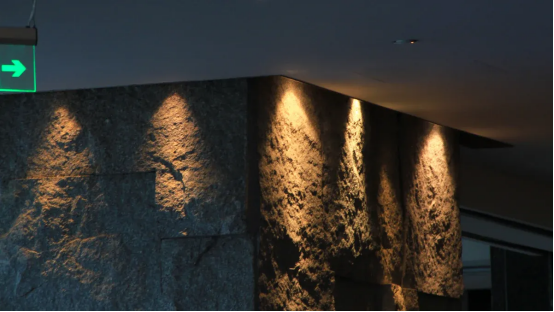
Wall washing places fixtures away from the wall to create smooth, even illumination across the entire surface. This technique minimizes imperfections and shadows. A clean, seamless glow results when light strikes the wall at the correct angle.
The fixture position determines the quality of the wall washing effect. A common starting point sets the wall washer at about one-third of the wall height away from the surface. RC Lighting's technical team offers a more refined ratio: optimal offset equals wall height divided by 2.5 to 3. This field-tested formula accounts for LED beam characteristics and real ceiling constraints.
Proper optical design reduces hotspots and dark areas. Beam angle, installation height, fixture spacing, and projection distance all influence the final result. A wallwasher with a medium beam suits standard facade illumination, while narrow beams serve high-rise buildings. The mounting distance directly affects how evenly light spreads across the wall surface.
Smooth painted walls, modern facades, and clean architectural surfaces suit wall washing best. Flat concrete elevations benefit from an even wash of light. Large commercial facades feel larger and more open under uniform lighting. Plain flat facades gain visual interest through a slight gradient.
Glass requires careful aiming because clear glass passes light through rather than returning the wash to the eye. Polished metal panels can mirror the light source and create glare, so designers must calculate angles before specifying wall washers.
Novaneon's Flexible Wall Washer series, including models NW2020TS and NW2421T, delivers uniform illumination on curved and irregular surfaces. These wall washers conform to columns, corners, and complex shapes. Designers wondering how to wall wash a curved facade find that flexible profiles solve the problem. The silicone extrusion bends to follow architectural contours. This adaptability makes wallwash lighting practical for projects where rigid fixtures fail. The result is consistent wall wash lighting across every surface.
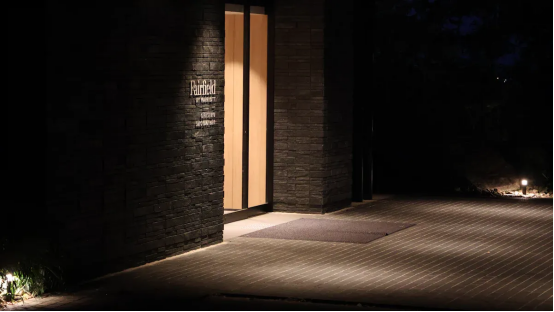
Wall grazing lighting places fixtures close to the surface and aims them at a sharp angle. The beam skims the facade and catches every recess. This approach creates shadow patterns that reveal the material beneath.
Mounting distance sets the strength of the effect. A placement guide from Vision Outdoor recommends 6 to 12 inches from the facade. Other design research suggests 12 inches or less. Narrow beams sharpen the shadows on brick or stone. This lighting angle skims the facade rather than striking it straight on. A straight-on wash erases those details; grazing preserves them.
How far the fixture sits from the surface changes the shadow length. A tighter gap produces short, crisp shadows. A wider gap softens the contrast. Installers can fine-tune each fixture after mounting. They simply adjust the angle until the depth looks right. This trial-and-error process takes minutes, not hours.
Stone, brick, and vertical fins benefit most from wall grazing. Grazing light highlights the craftsmanship in every joint. Designers choose this method when they want wall texture to become the story of the facade. However, grazing on a flat, smooth facade can look busy or harsh. A clean glow calls for wallwash lighting instead.
Masonry responds especially well to this treatment. Each uneven face catches the beam differently. The resulting pattern changes as the sun sets and artificial light takes over. Architects often specify this method for heritage buildings and feature columns.
Grazing light positioned tightly to a facade surface catches stone, brick, or concrete and produces micro-shadows that instantly elevate the material's premium quality.
Designers who want a soft wash on a modern surface should choose wallwash lighting. Wallwash suits smooth render. A wall surface covered with rugged stone responds far better to wall grazing than any flat wash. This technique remains the premier choice for a richer, more dimensional facade.
The visual outcome separates these two techniques most clearly. Wall washing produces a soft, even, and clean appearance. Wall grazing lighting creates a dramatic, textured, and high-contrast look. Each approach tells a different story about the same building.
A large shopping mall demonstrates the wall washing effect well. Designers specify linear wall washers with a 60-degree beam angle placed about 2 meters from the base of an 8-meter wall. The result is a perfectly even field of light. This uniform lighting defines the building shape as a whole. It also hides minor construction flaws, such as slight plaster waviness.
A boutique hotel shows what wall grazing can do. The design team mounts 10-degree pixel lights just 20 centimeters from a reclaimed brick feature wall. Every rough brick edge catches light while deep mortar joints fall into shadow. The wall surface becomes the main talking point. This technique makes the material the hero.
Beam angle drives these different outcomes. Wall washing uses wide beams of 45 degrees or more. These wide beams spread out and overlap, which reduces shadow contrast. Wall grazing uses narrow beams between 5 and 15 degrees. The narrow beam strikes at a sharp, oblique angle. It catches raised edges and casts long shadows behind depressions.
Construction tolerance also differs. Wall washing forgives minor bumps and waviness. Wall grazing demands a perfectly flat, well-finished surface. A flawed wall under grazing light magnifies every imperfection.
Flexibility matters enormously in facade lighting design. Curved facades, corners, and irregular structures challenge rigid fixtures. Bendable silicone wall washers solve this problem.
A flexible wall washer with bendable silicone extrusion follows curves and corners continuously. It can even bend through more than one plane, which designers call 3D bendable. This capability makes it suitable for flexible facade wall washing on complex geometry. Rigid aluminum linear fixtures cannot follow curves easily. They work best on straight surfaces.
The installation impact is significant. Flexible wall washers reduce fixture quantity, wiring, and alignment work. Rigid fixtures often require multiple short units on curved walls. These separate units produce visible joints and breaks in the light line. A continuous light line along curved facades, arches, domes, columns, and circular walls requires the bendable option.
Focused beam optics in flexible wall washers typically range from 20 to 60 degrees. These optics create even illumination without visible light dots. Silicone extrusion combined with high-precision wall-washing optics sweeps uniform light across curved walls and uneven structures. IP65 protection supports harsh outdoor facade contouring. An IP67 3D dual-bend flex wall washer supports curve outlines with beam angle options of 15, 30, 40, 60, 15×30, and 15×60 degrees.
For architectural lighting design, the choice affects both aesthetics and labor. Flexible wall washers combine adaptability with directional wall-washing optics. Rigid fixtures offer strong output and precise optics on straight runs. Designers must match the fixture type to the surface geometry.
Wall washing fixtures sit further from the wall, while wall grazing fixtures sit extremely close. A wall washer typically needs a 60–90 cm offset, but a grazing fixture mounts only 15–30 cm away. This gap changes everything about the installation plan.
Flexible wall washers simplify installation on complex surfaces. They bend around corners and columns without extra brackets or joints. This flexibility reduces labor time and fixture count. A rigid fixture on a curved building facade often needs multiple short units, which means more wiring and more alignment work. A flexible wall washer covers the same curve in one continuous run. Installers save hours on every floor.
Upfront cost tells only part of the story. Energy use, lamp replacement, and access costs drive the real expense over time. The table below compares these factors for flexible LED wall washing against traditional rigid grazing fixtures.
Factor | Detail |
Energy savings formula | kWh saved per fixture per year = (P_old − P_new) × operating hours ÷ 1000 |
Worked example (150W metal-halide → 36W LED) | 12 hrs/night, 365 days/year at USD 0.12/kWh = ~USD 59.92 saved per fixture per year |
100-fixture system | ~USD 6,000 annual energy savings |
Deferred maintenance | LED L70 at 50,000 hrs vs. 10,000 hrs for metal-halide adds USD 8,000–15,000 annually |
Rebate impact | Utility rebate eligibility (e.g., DLC Premium) can cut initial build cost by 15–30% |
Novaneon supports cost control through customization. Profile dimensions, bending direction, color temperature, beam angles, voltage, control systems, and IP ratings all adapt to project needs. ISO9001-certified manufacturing backs every order. These options reduce waste and rework, which protects the budget.
"Early collaboration between the lighting designer, architect, and contractor is essential, not optional. The cost of correcting a specification decision after hardware is on site – wrong CCT, wrong IP rating, wrong control protocol – is always an order of magnitude greater than the cost of making it right in design development." — Senior lighting designer, California Lighting Sales
A structured assessment prevents costly mistakes. Lighting professionals follow a clear process before specifying any fixture.
1. Assess the facade material. Document stone, concrete, metal, or glass, and note reflectivity, texture, and color. Sample testing on the actual material verifies how each surface responds.
2. Define the desired effect. Establish the lighting hierarchy, color temperature, operating scenes, and control approach. Entry areas may need emphasis for wayfinding, while feature zones call for accent lighting.
3. Evaluate mounting height and position. Confirm building height, target wall dimensions, and available setbacks. A wall height of 4–5 meters suits flexible systems well.
4. Set the budget. Share the budget range and delivery schedule early. This step shapes fixture selection and control options.
5. Verify with simulation. Run product-based calculations and mock-ups before finalizing the specification.
The material assessment drives the core recommendation. Wall washing suits smooth, modern facades and large expansive surfaces that need even illumination without visible hot spots. Wall grazing suits textured facades such as stone, brick, and concrete, where depth and shadow are desired. A smooth, defect-free surface under grazing reveals every bump, so designers avoid that pairing. Rough surfaces under a broad wash lose their character, so grazing remains the better fit there.
Beam pattern follows the same logic. Wide or medium flood beams serve uniform coverage. Spot, narrow spot, or horizontal spot beams serve grazing, with wide lateral and very narrow vertical distribution.
Mixed facades often contain both smooth and textured sections. A single technique rarely serves the whole building well. Designers can layer wall washing and wall grazing on different zones, then control each layer with its own scene.
This layered approach supports seasonal flexibility through programmable color-changing options. It also reinforces brand identity and landmark presence where the project demands it. A polished stone base might receive grazing to reveal its relief, while the smooth upper wall receives a clean wash that lets focal points stand out.
Novaneon's Flexible Wall Washer series serves this combined strategy across many project types. Target applications include building facades, commercial complexes, hotels, cultural venues, bridges, landscape features, public spaces, and renovation projects. The series supports complex or curved geometry through 3D-bendable silicone construction, which follows curves, corners, and complex forms while maintaining a controlled grazing effect. Integrated honeycomb covers reduce glare at close viewing range. Housing comes in black or white to blend with different facade materials. IP68-rated, fully sealed structures resist water, dust, moisture, and outdoor exposure. Seven interchangeable lens options plus Mono, Tunable White, RGB, and SPI Pixel RGBW deliver tailored beam distribution and dynamic effects.
For any facade lighting design, the technique must match the surface. Wall washing delivers the even, adaptable result that flexible facade wall washing demands. Wall grazing delivers texture and drama. Combining both gives designers the fullest control over a mixed building facade.
Choosing between them depends on facade material and the intended atmosphere. Wall grazing lighting sculpts stone and brick, adding depth and drama. Flexible facade wall washing smooths curves and columns, delivering an even, clean glow.
A facade lighting decision must weigh budget, maintenance, and the desired visual impact. Wallwash lighting reduces glare and simplifies aiming on irregular surfaces, while grazing requires precise fixture placement. Testing both avoids costly mistakes.
The facade material often dictates the choice. The budget also plays a role. Before specifying fixtures, test both techniques on site, or consult a lighting professional to find the right balance for the project.
Flexible wall washers bend along curves and corners without joints. This makes wall washing the practical choice for rounded or irregular buildings. A rigid fixture struggles on these shapes. Designers gain a continuous light line and a cleaner wall washing effect across the whole surface.
Installation distance depends on the technique. Wall washers typically sit 60 to 90 centimeters away for an even spread. Wall grazing fixtures mount only 15 to 30 centimeters from the surface. This short gap lets the beam skim the wall and reveal texture.
Yes. Mixed facades often carry smooth and textured sections. Designers can apply wall grazing to a stone base and wallwash lighting to the upper floors. Layered control lets each zone shift scenes independently. This approach gives facade lighting design more depth and flexibility.
The wall surface material drives the decision. Smooth, modern walls suit wall wash lighting. Rough stone or brick favors wall grazing. Budget, maintenance, and the desired mood also matter. Testing both techniques on site prevents costly mistakes before specification.
Please provide the following detailed information so that our business representatives can better understand your needs and get in touch with you as soon as possible.