
 EN
 English
 繁体中文
 Italian
 Greek
 Spanish
 Hebrew
 Japanese
 Portuguese
 Korean
 Russian
 French
 German
 Arabic
Blog & Events
Follow NOVANEON for more valuable information to know early
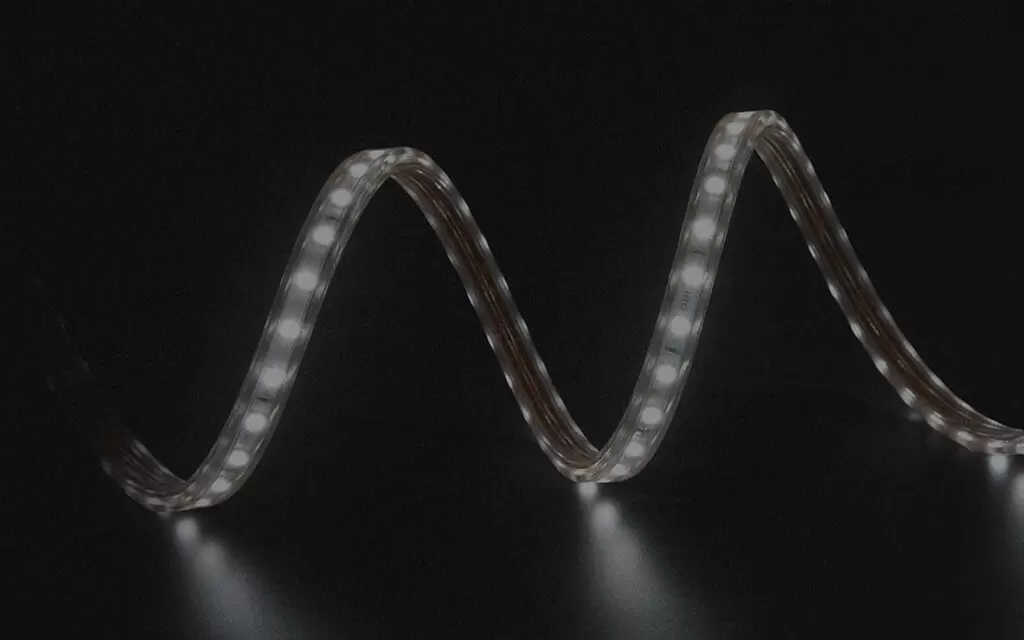
Follow NOVANEON for more valuable information to know early
Oct 19Source: Views: 3
Lumens per watt (LPW) determines how bright and how energy-efficient a high efficiency led flex installation will be. This single figure reveals how well a product converts electrical power into visible light. Wattage alone shows consumption, not output. For architectural specifications, LPW matters far more than wattage.
Designers and contractors now ask a practical question: does a higher LPW really deliver better performance, and in what ways? The answer touches brightness, energy use, heat, and lifespan. A high lumen rating per watt signals strong energy efficiency and cooler operation. This article breaks down LPW in plain language. Readers will see how the metric shapes flexible led lighting choices and flex led lights performance on real projects.
Lumens per watt is the measure of how efficiently a light source converts electrical watts into visible lumens. The metric answers a basic question: how much usable light does a product deliver for every unit of electricity it draws? A higher value signals greater efficiency. Buyers who compare high efficiency led flex products rely on this figure to judge real output rather than nominal ratings.
The concept overlaps with luminous efficacy, a term engineers use for the same relationship between light produced and power consumed. In practice, the two phrases describe one idea. A fixture that generates more visible light from less electricity earns a stronger rating. That principle guides every specification decision in architectural lighting.
The calculation is straightforward: lumens divided by watts. A product that emits a stated lumen output while drawing a known wattage yields a single number. That number allows direct comparison across products, brands, and technologies.
Wattage alone shows power consumption, not brightness. A 10-watt fixture and a 20-watt fixture may produce identical output if their efficacies differ. This is why specifiers should treat the ratio as the key comparison metric. The ratio normalizes performance and removes the confusion that raw wattage creates.
Modern LEDs typically achieve 80 to 120 lumens per watt. Specialized products reach 150 lm/W or more. Well-designed flex led lights often land in the 110-140 lumens per watt range, which places them among strong performers for architectural use. A high-efficacy strip built to these levels delivers meaningful light from modest power.
Consider a simple example. A strip rated at 100 lumens per watt and drawing 3 watts per foot produces roughly 300 lumens per foot. A lower-grade product at 70 lumens per watt needs more than 4 watts per foot to match that output. The first option saves energy and runs cooler. The second option demands more power and generates more waste heat. The math is simple, and the implications are significant for any project with long runs or tight thermal budgets.
The same logic applies across an entire installation. Hundreds of feet of flex add up quickly. A modest gain in efficacy compounds into measurable savings in electricity and driver load. Designers who understand the calculation can defend their choices with clear numbers. Contractors can verify claims against test conditions. The metric rewards informed buyers and exposes weak products.
A higher LPW rating delivers more lumens for the same wattage. That relationship produces brighter output at lower power. Wattage alone hides this difference, because it reports consumption rather than output. Specifiers see the gap immediately when they compare two products side by side. One draws modest current and floods a surface with light. The other draws more and delivers less. The difference widens across long runs, where every extra unit of draw multiplies.
Architectural brightness targets give the number practical meaning. Direct accent lighting generally calls for roughly 150 to 250 lumens per foot. Accent zones under rails and decks sometimes push toward 200 to 350 lumens per foot. Dark wood surfaces absorb more light, so designers scale upward to compensate. Typical LED strip wattage runs about 2 to 4 watts per foot (6.6 to 13.1 W/m). The LPW rating determines the brightness that power yields. A designer who targets 150 to 250 lumens per foot meets the goal with lower draw when LPW is high. A strip at the top of the efficacy range turns 3 watts per foot into a far stronger result than a low-grade product manages at the same input.
High-density 96 LED strips illustrate the point. These products deliver 800 to 1200 lumens per meter depending on LED type and power. Designers who need high-lumen strips for a façade or a retail ceiling can hit the target with fewer runs. The total lumens per meter climbs while the electrical draw stays controlled. That combination supports efficient brightness across long installations. Fewer runs also mean fewer connections and a cleaner visual line. A designer can meet a brightness target without oversizing the driver. That flexibility helps on curved façades and tight coves.
Higher LPW means less waste heat. Every watt that does not become light becomes thermal load inside the fixture. That heat stresses drivers, ages phosphors, and shortens service life. A high efficiency led flex product converts more of its input into visible light and sheds less energy as heat. Drivers run cooler. LEDs degrade more slowly. Cooler operation also reduces color shift over time. Maintenance intervals stretch, and the installation keeps its intended look for longer.
The energy story follows the same logic. Flexible led strip lights with strong output draw fewer watts for a given lumen output. A project with hundreds of feet of flex sees the savings compound across every circuit and every hour of operation. High-performance flex led strips also place less demand on drivers, which allows smaller units and simpler thermal design. Contractors appreciate the lighter electrical load. Owners appreciate the lower bill. The cost per lumen falls as the rating rises. Buyers who compare flex led lights on this basis notice the difference in driver sizing.
Efficiency therefore pays twice. It lowers operating cost and it protects the hardware that delivers the light. Specifiers who weigh flex led lights on this basis choose products that hold their output over years of service. The metric connects directly to reliability, not just to the electricity bill. That reliability argument often outweighs the initial price difference, and it shows up as a lower cost per lumen across the service life.
A high-LPW product and a low-LPW product diverge sharply on brightness, heat, and driver load. The high-LPW strip turns each watt into more visible light, so a run of modest length floods a surface with strong output. The low-LPW strip draws more current for the same result and sheds the difference as waste heat. Drivers on the low-LPW circuit work harder and run hotter. That thermal stress shortens component life and invites early failure.
The gap widens on large installations. A designer who specifies high efficiency led flex at the top of the efficacy range meets a 150 to 250 lumens per foot target with fewer runs and smaller drivers. A low-LPW alternative demands more wattage per foot and often more fixtures to reach the same lumen count. Each added fixture brings another connection, another driver, and another point of potential failure. The installation grows heavier and more complex.
Low-LPW flex needs more wattage to hit the same brightness. That extra draw multiplies across hundreds of feet and thousands of operating hours. Energy costs climb steadily. The added fixtures also raise maintenance costs, because more components mean more service visits over the life of the system. A product that looks cheaper at purchase often costs more across its service life.
Specifiers should compare lumens per watt rather than wattage alone. The ratio exposes the true cost of light. A low-LPW strip may carry a lower price tag, yet it delivers less efficient brightness for every dollar of electricity. Buyers who filter flex led lights by efficacy choose products that hold their output, run cooler, and demand less power. That discipline protects both the budget and the visual result.

Efficacy alone does not guarantee a successful installation. Specifiers must weigh LPW alongside color rendering, color consistency, and beam uniformity. A high-efficiency product that shifts color across a long run undermines the design intent. Buyers should treat the color rendering index as a core specification, not an afterthought.
DOE LED Basics: a minimum CRI of 80 is generally recommended for interior lighting, while CRI 90+ indicates excellent color fidelity — but CRI is imperfect, and R9, TM-30 Rf, and TM-30 Rg provide more comprehensive color-rendering information.
Project tier dictates the color metrics to specify. Utility zones accept Ra80 with tight MacAdam binning for large-area runs. Customer-facing spaces demand tighter CCT consistency. Color-sensitive spaces such as museums and galleries require Ra90 with R9 reporting or physical sample review. Inspection-critical environments call for TM-30 data and supplier change control. Specifiers should match CRI grade to project positioning, because over-specifying raises cost and under-specifying fails acceptance.
Novaneon's High Efficiency & 3D Bending LED Flex series, including models FB1212, FB1616 HE, FB2020 HE, FB2424 HE, NV1617T HE, NV2020T HE, NV2424T HE, TL1016 HE, TL1080 HE, and PV1204A8 HE, combines high efficacy with multi-directional bending for curved façades and complex structures. Premium silicone construction delivers durability and bending stability indoors and outdoors. ISO9001-certified manufacturing and customization services give specifiers confidence in consistent color and reliable delivery.
Control compatibility shapes how flexible led lighting performs in architectural and decorative lighting schemes. DMX512 and DALI protocols allow smooth dimming and long-term stability on curved surfaces and complex structures. Specifiers can tailor color temperature, beam angle, and operating voltage to match project requirements.
Novaneon tailors DMX512 and DALI control, profile dimensions, bending direction, and protection levels for indoor and outdoor environments. This flexibility lets designers match lumen output and power draw to each zone while preserving visual consistency.
Specifiers should confirm the lumen basis behind any rating. A luminaire lumen figure reflects real fixture output. A lamp or chip lumen figure overstates output by roughly 10 to 25 percent. Buyers then compute efficacy as luminaire lumens divided by system watts, including the driver. A rating of 130 or higher is good, 150 or higher is excellent, and anything below 100 is outdated. The table below lists the factors worth checking.
Factor | What to verify |
CRI and R9 | CRI plus R9 of at least 50 for color-critical spaces |
CCT | Nominal value and ANSI tolerance band |
Power factor | 0.9 or higher |
THD | 20 percent or less |
IP rating | IP54+ damp, IP65+ wet, IP66+ washdown or coastal |
Voltage range | Confirm the driver accepts building voltage |
Voltage drop shapes delivered brightness on long runs. Thin PCB traces create resistance, so the far end of a strip receives less voltage and appears dimmer. That uneven output reads as reduced efficiency. Thicker copper traces and double-layer PCBs improve current distribution. A 24V strip typically runs about 18 feet before visible voltage drop, while a 12V strip manages about 12 feet. Designers should plan power injection or shorter runs to protect proper lumen output.
Application type sets the efficacy target. Façades and landscape zones tolerate moderate ratings, while retail and hotel interiors reward higher output per watt. Museums demand tight color control alongside strong efficacy. Public art installations balance visual drama with long service life. Designers should match lumens per foot targets to each zone and confirm ip ratings for wet or coastal sites. Outdoor led strip lights need sealed housings and correct installation methods. Indoor flex led lights can use simpler protection levels. Buyers who compare lumens and power draw across products protect both budget and visual result.
Higher LPW delivers more lumens for each watt. Lighting runs cooler and lasts longer. This metric remains the most reliable single indicator of high efficiency led flex performance. Specifiers should treat it as a primary filter during product selection. They should still weigh color quality, dimming compatibility, and voltage drop alongside the rating. A strong lumen output per watt protects both budget and visual result. Rising LPW standards continue to shape architectural decisions. Designers who track these gains secure energy-efficient lighting that meets modern expectations. Flexible led lighting will keep advancing as efficacy climbs. Buyers who compare flex led lights on this basis capture the full value of each watt of power.
Please provide the following detailed information so that our business representatives can better understand your needs and get in touch with you as soon as possible.