
 EN
EN
 English
 繁体中文
繁体中文 Italian
 Greek
Greek Spanish
 Hebrew
 Japanese
 Portuguese
 Korean
 Russian
 French
 German
 Arabic
Blog & Events
Follow NOVANEON for more valuable information to know early
Follow NOVANEON for more valuable information to know early
Jun 25Source: Views: 106
The 2025 Guangzhou International Lighting Exhibition once again demonstrated how rapidly the lighting industry is evolving. Instead of focusing solely on brighter fixtures or higher luminous efficacy, manufacturers and project developers are paying greater attention to intelligent control, installation efficiency, sustainability, and architectural integration. As cities continue investing in urban renewal, commercial complexes, transportation hubs, hotels, and public spaces, lighting has become an essential part of architectural identity rather than a supporting component.
One of the most noticeable trends throughout the exhibition was the growing demand for lighting systems capable of simplifying installation while delivering consistent visual performance across increasingly complex architectural environments. Developers are looking beyond conventional LED strips toward integrated systems that combine durability, optical precision, flexible installation, and intelligent control.
This market shift is creating new opportunities for manufacturers capable of delivering efficient architectural LED lighting solution portfolios instead of standalone products. From continuous façade illumination to curved building outlines and immersive urban landscapes, today's projects require lighting products engineered specifically for architectural applications.
Against this backdrop, solutions such as Novaneon outdoor LED lighting system, Novaneon LED neon flex, and advanced linear lighting technologies illustrate how modern lighting manufacturers are responding to increasingly sophisticated project requirements.
For decades, architectural lighting primarily served one purpose—making buildings visible after sunset. Today's projects demand considerably more. Lighting has become an important design language capable of highlighting architectural details, reinforcing brand identity, improving user experience, and supporting sustainable construction standards.
Modern architects now consider lighting during the earliest stages of building design. Rather than installing luminaires after construction is complete, lighting systems are increasingly integrated into façades, ceilings, walkways, bridges, and public landscapes as permanent architectural elements.
Several factors are driving this transformation.
Contemporary buildings feature flowing curves, irregular façades, perforated metal panels, glass curtain walls, and three-dimensional exterior structures. Traditional rigid lighting products often struggle to adapt to these designs.
As a result, demand continues growing for custom LED flex for architectural design, LED flexible lighting system for architecture, and architectural LED flex lighting system solutions that can follow unique building geometries without compromising visual consistency.
Flexible lighting products are no longer viewed simply as decorative accessories. They have become essential construction materials that enable designers to achieve lighting effects previously considered impractical.
Project owners are no longer satisfied with bright lighting alone. Today's commercial developments require lighting systems capable of balancing multiple objectives simultaneously, including:
This explains why technologies such as precision optical LED lighting system solution, optical LED linear lighting system, and beam controlled LED flex lighting are becoming increasingly important. Better optical control minimizes wasted light, improves façade uniformity, and enhances the architectural appearance without excessive energy consumption.
Unlike general lighting products, architectural lighting often requires customized dimensions, installation methods, beam distributions, and control protocols.
Consequently, many developers now prefer working directly with an experienced architectural LED lighting manufacturer, OEM LED flex lighting manufacturer, or professional architectural lighting supplier capable of supporting projects from design consultation through production and installation.
Rather than purchasing standard products, architects increasingly expect manufacturers to provide complete engineering LED lighting solution packages that address structural limitations, environmental exposure, maintenance accessibility, and long-term reliability.
One of the most discussed technologies showcased during this year's exhibition was the adoption of DC48V ultra-long lighting systems. As urban projects continue expanding in scale, the limitations of conventional low-voltage LED strips have become increasingly apparent.
Traditional systems often require frequent power injection points, numerous electrical connections, and complicated wiring layouts. These factors increase labor costs while creating additional maintenance challenges throughout the product lifecycle.
The emergence of DC48V ultra long LED strip technology provides an effective solution to these long-standing issues.
A major advantage of DC48V ultra long LED flex for continuous facade installation lies in its ability to maintain long uninterrupted lighting sections from a single power source.
Instead of dividing a façade into numerous independent lighting zones, contractors can install longer continuous runs that preserve visual consistency while significantly reducing electrical complexity.
For large commercial projects, this offers several practical benefits:
The concept of continuous run LED flex lighting system is particularly valuable for projects involving hotels, shopping centers, office towers, airports, bridges, and transportation infrastructure where uninterrupted illumination enhances the overall architectural expression.
Large buildings present unique installation challenges. Long vertical façades require lighting products capable of maintaining stable brightness over considerable distances while withstanding outdoor environmental conditions.
Solutions such as ultra-long LED flex, ultra long waterproof LED flex lighting system, and extra long LED flex for building facade address these requirements by combining long-distance power transmission with reliable outdoor protection.
This makes them especially suitable for applications including:
As a result, wall washer LED for high-rise buildings and building facade wall washer lighting solutions are becoming increasingly common in modern urban developments where lighting contributes directly to the city's nighttime identity.
Construction schedules continue becoming tighter across the global building industry. Every additional connection, junction box, or power injection point represents extra labor and potential future maintenance.
Ultra-long lighting systems help reduce these installation challenges while maintaining continuous lighting effects.
For project contractors, the advantages include:
These practical improvements explain why commercial facade lighting solution LED flex products are increasingly replacing conventional short-run lighting systems in large-scale architectural projects.
While longer lighting runs improve installation efficiency, modern architecture also demands greater flexibility.
Contemporary buildings rarely consist of simple straight lines. Instead, designers frequently incorporate sweeping curves, folded façades, cylindrical towers, sculptural walls, and irregular geometric forms that challenge conventional lighting products.
Rigid luminaires often require custom brackets, segmented installation, or complicated fabrication processes.
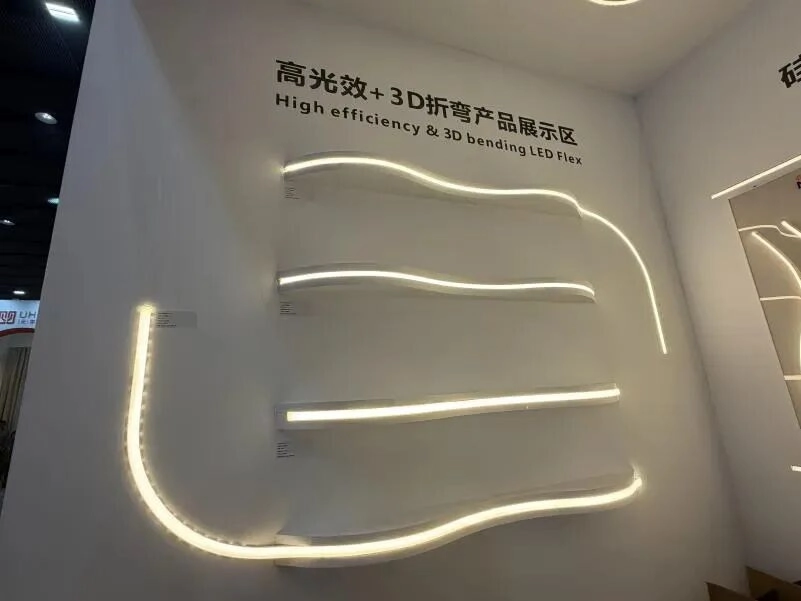
This has accelerated interest in bendable 3D LED neon strip, 3D bending LED flex, and high performance curved LED flex lighting system technologies.
The best architectural lighting solutions adapt naturally to the building rather than forcing designers to modify their original concepts.
Modern architectural neon lighting system products are increasingly engineered with flexible silicone structures capable of bending horizontally, vertically, or in multiple directions while maintaining consistent light output.
This flexibility enables lighting designers to illuminate:
Instead of assembling multiple short segments, installers can achieve smooth, continuous lighting using flexible LED neon strip for signage and facade systems specifically developed for architectural environments.
Flexibility alone is not sufficient.
Architectural lighting must also deliver consistent brightness across every visible section of a building.
Uneven illumination quickly becomes noticeable on long façades, particularly in premium commercial projects.
For this reason, technologies such as uniform light distribution LED strip, commercial optical LED strip system, and optical control LED flex lighting continue attracting attention throughout the architectural lighting industry.
Advanced optical engineering allows designers to create continuous luminous surfaces without obvious hotspots or dark areas, resulting in cleaner architectural lines and improved nighttime aesthetics.
This level of optical performance is particularly valuable for luxury hotels, corporate headquarters, shopping centers, and public landmarks where façade lighting directly influences visitor perception.
Another significant advantage of modern bendable lighting systems is improved energy performance.
Many newly developed products combine flexible construction with higher luminous efficacy, allowing architects to satisfy increasingly demanding green building requirements.
Solutions such as energy efficient ultra long LED flex, high efficiency bending LED flex, and energy saving flexible architectural LED system help reduce lighting power density while maintaining strong visual impact.
These characteristics support certification systems such as LEED and WELL, both of which continue influencing commercial building design worldwide.
Beyond energy savings, longer product lifespan and reduced maintenance requirements also contribute to lower environmental impact over the building's operational lifetime.
The architectural lighting market is no longer driven by brightness alone. As governments introduce stricter building energy regulations and developers pursue lower operating costs, lighting systems are expected to deliver greater efficiency without compromising visual quality.
This trend was evident throughout the Guangzhou International Lighting Exhibition, where many manufacturers focused on products capable of combining high luminous efficacy with advanced optical control. Rather than flooding an entire façade with light, today's systems are designed to illuminate only the intended architectural surfaces, improving visual impact while reducing unnecessary energy consumption.
For designers, this means selecting lighting products that balance optical performance, durability, and efficiency throughout the life cycle of a project.
Modern architectural projects often feature textured stone, perforated aluminum panels, curtain walls, and irregular concrete structures. These materials interact differently with light, making optical control increasingly important.
Solutions incorporating precision optical LED flex lighting, optical LED linear, and high precision LED optical lighting enable designers to achieve cleaner beam distribution while minimizing glare and light spill.
Instead of relying solely on higher power output, precision optics help maximize the effectiveness of every lumen. This approach creates stronger visual contrast, highlights architectural textures, and maintains consistent brightness across large building surfaces.
Many commercial developments are therefore adopting lens based LED strip lighting system technologies that allow beam angles to be selected according to the façade structure rather than forcing architects to adapt the building to standard lighting products.
Green building certifications continue influencing lighting specifications around the world.
Architects are increasingly required to consider lighting power density (LPD), maintenance cycles, and overall energy performance during project planning. As a result, demand continues to grow for energy efficient flexible LED strip for building outline, high efficiency LED strip lighting solution, and energy efficient LED linear lighting system products.
Compared with conventional decorative lighting, modern high-efficiency systems offer several long-term advantages:
These benefits are particularly valuable for projects operating continuously throughout the night, including commercial districts, transportation hubs, hotels, and public landmarks.
Architectural lighting is no longer limited to iconic skyscrapers or landmark buildings. As urban renewal projects continue worldwide, lighting solutions are being incorporated into a much broader range of environments.
Different applications naturally require different lighting characteristics, making customization increasingly important.
Luxury hotels use lighting to communicate brand identity before guests even enter the building.
Smooth illumination, concealed fixtures, and carefully controlled brightness create a welcoming atmosphere while emphasizing architectural details.
Consequently, designers often specify architectural LED neon flex for hotel exterior lighting, luxury hotel facade LED lighting solution supplier, and hotel facade lighting LED flex systems capable of producing seamless linear illumination without visible hotspots.
Continuous lighting also reduces visual interruptions, helping designers create clean architectural outlines that remain attractive from multiple viewing angles.
Shopping malls, office complexes, and mixed-use developments increasingly rely on lighting to distinguish themselves from surrounding buildings.
Instead of static illumination, many developers now integrate dynamic lighting capable of supporting seasonal events, corporate branding, and public activities.
Solutions such as commercial facade lighting LED system, LED flex lighting for shopping mall facade design, and shopping mall LED facade lighting allow designers to create recognizable nighttime identities while maintaining high energy efficiency.
In many projects, these systems are combined with DMX LED lighting control system technologies, enabling synchronized color changes and programmable lighting scenes without replacing the physical fixtures.
Bridges, metro stations, tunnels, and public walkways present different challenges compared with commercial buildings.
These environments demand products capable of operating continuously under rain, dust, ultraviolet exposure, vibration, and changing temperatures.
As cities continue upgrading public infrastructure, demand is increasing for solutions including metro station LED lighting system, underground LED lighting system for landscape pathway, landscape underground LED lighting, and urban lighting LED system applications.
For these projects, long service life is often just as important as visual appearance, making durable engineering and reliable waterproof performance essential selection criteria.
No two architectural projects are identical.
Building dimensions, façade materials, installation methods, environmental conditions, and design objectives vary significantly from project to project. Consequently, standardized lighting products rarely provide the best solution.
Instead, architects increasingly prefer manufacturers capable of delivering customized engineering support.
Rather than simply purchasing LED strips, project owners now seek complete project based LED lighting solutions tailored to specific architectural requirements.
Today's lighting suppliers are expected to participate throughout the project lifecycle.
This typically includes:
For this reason, experienced custom LED flex manufacturer, custom LED flex lighting supplier, and ODM LED lighting solutions provider companies are becoming valuable long-term partners rather than simple equipment suppliers.
This collaborative approach reduces project risks while helping architects achieve their original design vision more accurately.
Large architectural developments frequently require non-standard dimensions, unique mounting structures, customized beam angles, or special control protocols.
Manufacturers capable of producing custom length LED strip lighting for architectural use, customizable LED flex lighting system, and modular LED lighting system for building projects are therefore better positioned to support complex international developments.
Whether the project involves commercial offices, transportation infrastructure, hospitality, or public landmarks, customized production provides greater flexibility throughout both construction and future maintenance.
As architectural lighting evolves toward longer installation distances, greater flexibility, and higher efficiency, manufacturers must continuously expand both their technology portfolio and engineering capabilities.
Solutions developed under the Novaneon architectural lighting portfolio reflect many of the trends currently influencing the global lighting market.
Instead of focusing on individual products, integrated systems are increasingly designed to address complete architectural lighting requirements across commercial, hospitality, infrastructure, and urban landscape applications.
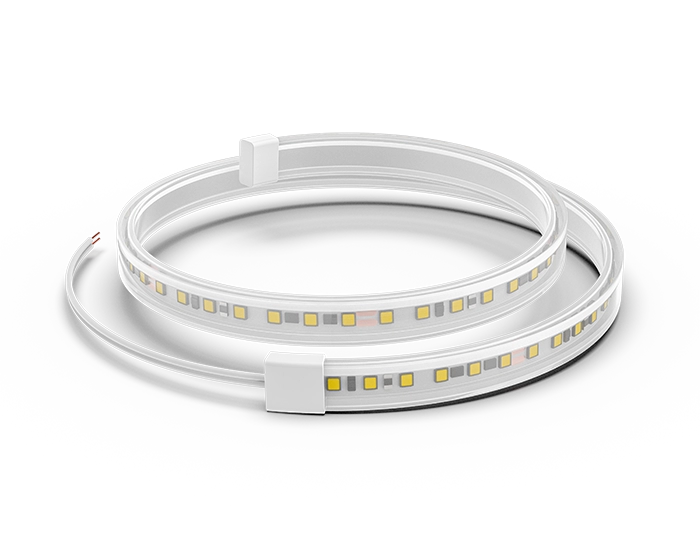
For example, the Novaneon outdoor LED lighting system emphasizes continuous illumination for large-scale exterior installations, while Novaneon LED flex products support complex building geometries requiring flexible installation.
Meanwhile, Novaneon waterproof LED flex solutions extend application possibilities into demanding outdoor environments where weather resistance and long-term durability remain critical.
These capabilities allow designers to integrate lighting into a variety of architectural scenarios, including façade outlines, wall grazing, public landscapes, bridges, commercial complexes, and transportation facilities.
As demand grows for comprehensive lighting systems, Novaneon façade lighting solutions continue aligning with industry trends that emphasize optical precision, installation efficiency, sustainability, and customized engineering support.
The discussions throughout this year's Guangzhou International Lighting Exhibition made one message clear: architectural lighting is becoming increasingly integrated with building design rather than functioning as a separate engineering discipline.
Future projects will likely place even greater emphasis on several key directions:
As these trends continue developing, products such as DC48V ultra-long LED lighting system, ultra-long LED strip lighting system for architecture, LED linear lighting system for architecture, and professional grade LED facade lighting system will become increasingly important across commercial and public infrastructure projects.
Ultimately, the future of architectural lighting will not be defined solely by brighter LEDs or larger installations. Instead, success will depend on how effectively lighting manufacturers combine engineering expertise, optical innovation, installation efficiency, and customized project support into complete solutions that enhance the built environment.
For architects, contractors, and developers, choosing an experienced architectural lighting supplier, commercial LED lighting manufacturer, and global LED lighting solutions provider will play an increasingly important role in delivering visually compelling, energy-efficient, and durable lighting systems capable of meeting the demands of modern architecture for years to come.
Please provide the following detailed information so that our business representatives can better understand your needs and get in touch with you as soon as possible.